


Resource Type: Blogs
Tag: Fulfilment
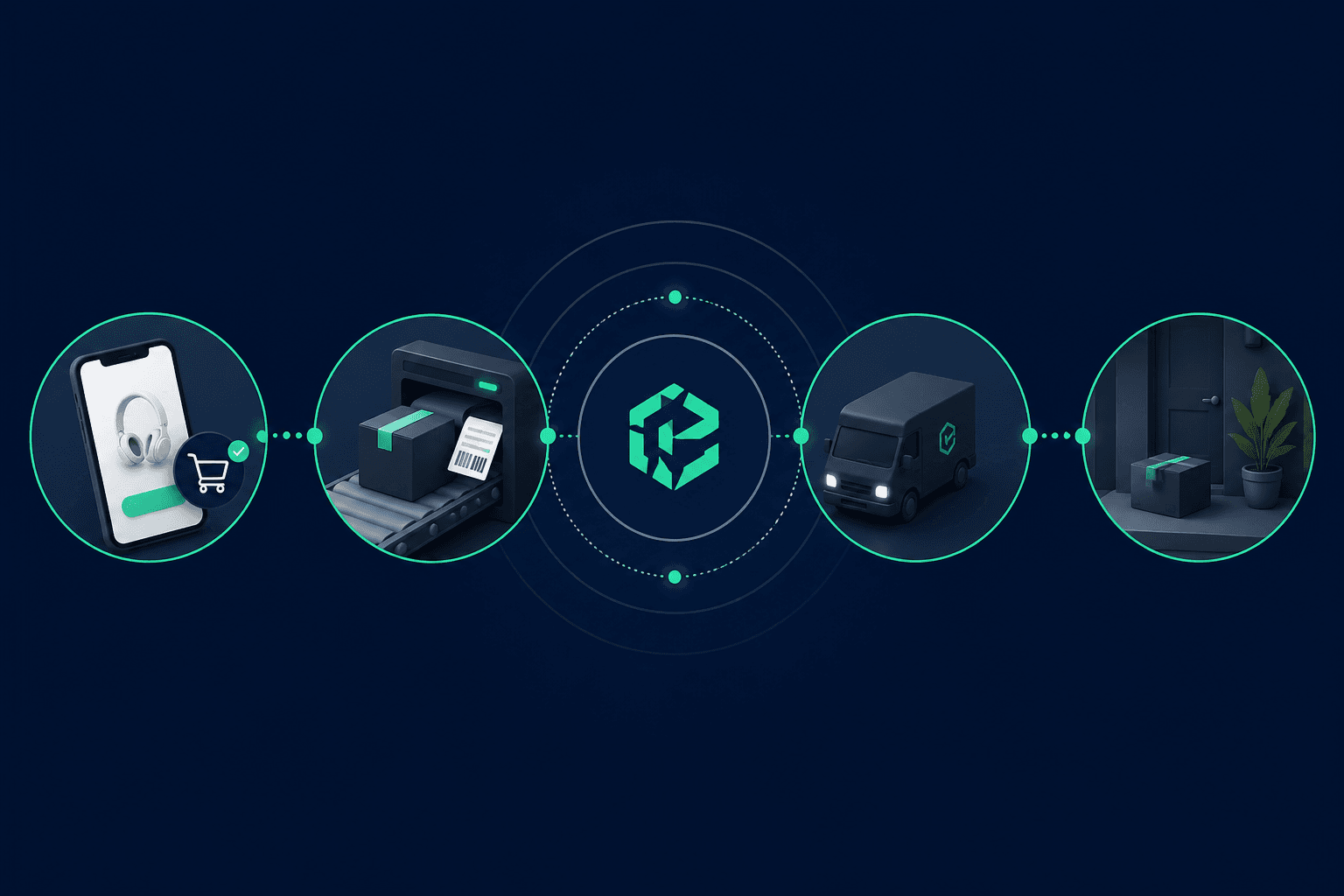
Your checkout is flawless, your marketing is brilliant, and your product is elite. But if the delivery fails, none of it matters. In modern ecommerce, the final mile is the game. Why are we still running it on disconnected legacy systems?
July 22, 2026
Resource Type: Blogs
The Hidden Cost of Disconnected Fulfilment Technology: A Step-by-Step Integration Framework for 2026
Your checkout is flawless, your marketing is brilliant, and your product is elite. But if the delivery fails, none of it matters. In modern ecommerce, the final mile is the game. Why are we still running it on disconnected legacy systems?
July 22, 2026
For years, retailers believed warehouse capacity was the biggest constraint on fulfilment performance. Increasingly, that's no longer true. Today's biggest bottleneck is the speed at which your systems can make operational decisions.
Every order creates dozens of decisions that used to rely on people. Today, they need to happen automatically, and correctly, in milliseconds.
The delay between an order entering your operation and your systems making the routing, fulfilment and carrier decisions needed to move it forward has a significant impact on operational efficiency. This decision latency is not just an operational headache; it is a direct leak on your balance sheet.
When front-end marketing investments are undermined by disconnected back-end technology, the financial impact extends far beyond logistics:
- Working capital is trapped in slow return-to-stock processes.
- Margins are eroded by inefficient carrier routing.
- Repeat purchasing suffers when preventable delivery issues become customer service problems.
In 2026, competitive advantage is no longer measured in square footage. It is measured in decision speed.
The Disconnected Tech Tax: The Costs Beyond Delivery
When fulfilment technology is fragmented, the cracks quickly show under operational pressure, particularly during high-volume periods like Peak. Failed deliveries cost UK businesses an estimated £1.6 billion annually, but the direct delivery cost is often the smallest part of the problem. The larger impact comes from repeat contacts, refund requests, lost customer lifetime value and operational inefficiencies that accumulate across every department.
Consider a retailer processing 30,000 orders during Peak. If carrier routing decisions rely on batch updates every 15 minutes rather than live data, thousands of parcels can miss the optimal dispatch window before anyone notices. The issue isn't warehouse productivity; it's decision latency.
This is not simply a logistics cost: it is a direct hit to your brand equity, customer acquisition metrics, and balance sheet.
The consequences of disconnected systems are structural:
- Siloed Data and Missed Order Cut-offs: If warehouse automation, inventory intelligence, and carrier systems are not natively integrated, data sync delays are inevitable. A late afternoon order might sit in the queue because the WMS was slow to notify the CMS, missing the late carrier collection and pushing next-day deliveries into the next week.
- Carrier Mix Inflexibility: Relying on a single carrier or a static, manual routing sheet leaves you vulnerable. If a carrier faces localised backlogs, strikes, or capacity limits during Peak, your operations team cannot easily pivot, resulting in catastrophic delivery delays.
- The "Where is My Order?" (WISMO) Inundation: When tracking data is trapped inside a legacy carrier portal, your customer service team is left blind. Without proactive alerts, customers flood your inbox, driving up your cost-to-serve and eroding satisfaction. Many retailers still view customer service as the team responsible for fixing logistics problems. In reality, the best customer service strategy is preventing those problems from happening in the first place.
- Inefficient Returns Management: For subscription and luxury brands, reverse logistics is a massive margin drain, with global returns averaging up to 30%. Disconnected returns processes mean returned stock takes weeks to be graded and re-shelved, tying up valuable inventory and capital. Reverse logistics remains one of the least digitised parts of ecommerce operations despite having one of the biggest impacts on working capital.
To eliminate these hidden costs, forward-thinking brands are moving away from traditional, siloed third-party logistics (3PL) relationships. Leading retailers are increasingly treating fulfilment as a technology capability rather than a logistics function.
Moving Beyond the Legacy 3PL: Why Fulfilment is a Software Problem
Warehouses haven't stopped being important. What has changed is where competitive advantage comes from.
Twenty years ago, success was largely determined by warehouse location, labour availability and storage capacity. Today, those remain essential, but increasingly they are not enough. The retailers outperforming the market are using technology to make better operational decisions faster than their competitors.
For decades, the logistics industry measured success in square footage, locations, and physical capacity. But global commerce has changed. The primary challenge is no longer moving physical products: it is orchestrating digital complexity.
Traditional, manual 3PLs often treat software as an afterthought, layering disjointed, third-party applications over manual labour. This creates an immediate margin drag. In contrast, an integrated ecommerce infrastructure platform operates on a different philosophy:
- Warehouses are the proving ground, not the product: The physical warehouse is simply where software and robotics are validated, stress-tested, and optimised at scale. We did not build software to run warehouses; we built warehouses to prove software.
- Logistics becomes embedded workflow: Every operational process, from carrier selection to returns handling, should be a configurable software product, a workflow engine, or a data product.
- Operational data becomes the moat: When every order, robotics movement, and carrier selection flows into a centralised, queryable data layer, predictive intelligence becomes possible.
By shifting your operations to a technology-first infrastructure, you transform fulfilment into a competitive advantage that protects margin and enables profitable growth.
How to Build a Connected Fulfilment Strategy: A 5-Step Operational Framework
Before investing in more automation, more warehouse space or more carriers, most organisations should first ask whether their existing systems are connected well enough to support better decisions. This framework is designed to help you audit, connect, and optimise your technology stack for maximum efficiency.
Step 1: Audit and Eliminate System Latency
Your WMS, RMS, and CMS must operate within the same digital ecosystem to make split-second routing decisions. When an order is placed, your system should calculate the optimal carrier route in milliseconds, based on weight, dimensions, destination, and live carrier capacity.
Actionable Step: Measure the time it takes for an order to move from checkout to label print. If this takes longer than five seconds, your systems are running on batched processing rather than live API integrations.
Step 2: Implement Dynamic, Real-Time Multi-Carrier Routing
A resilient strategy means never putting all your packages in one basket. By integrating with a broad portfolio of carrier partners, your system can automatically re-route parcels if one carrier experiences service degradation. This protects your delivery promises and secures your margins by using preferential rates across different networks.
Actionable Step: Build a carrier mix that includes national postal services, express couriers, and regional specialists. Ensure your CMS can dynamically switch carriers at the packing station if a specific route is flagged as congested.
Step 3: Connect Your Customer Experience (CX) to Your Logistics Data
Logistics performance should directly inform customer service. Instead of waiting for customers to complain about a late parcel, your systems should proactively flag deviations.
Actionable Step: Implement a live Contact Rate Dashboard. This tracks the percentage of inbound customer service contacts against the total volume of shipments for each courier account. If a specific carrier shows a sudden spike in contacts, your operations team can investigate and resolve the issue before it escalates into a wider service failure.
Step 4: Streamline and Automate the Reverse Logistics Journey
Returns are an inevitable part of modern ecommerce, but they do not have to be a bottleneck. By connecting your warehouse operations with an automated returns portal, you can provide customers with instant labels, track incoming returns, and accelerate the grading process.
Actionable Step: Move away from manual spreadsheet tracking for returns. Integrate your returns portal directly with your WMS so your inventory levels update automatically the moment a returned item is scanned back into the warehouse.
Step 5: Embed Sustainability into Your Carrier Selection
With environmental factors influencing up to 80% of purchasing decisions, sustainable logistics is now a core requirement. Your fulfilment technology must be capable of tracking and reporting carbon emissions, whilst actively promoting eco-friendly delivery options.
Actionable Step: Configure your CMS to prioritise carriers with proven green credentials, such as extensive electric vehicle fleets. Additionally, integrate Out-of-Home (OOH) delivery options, like click-and-collect or parcel lockers, which can reduce delivery emissions in dense urban areas whilst offering greater convenience to the customer.
Case Study in Connected Infrastructure: The THG Fulfil Model
Transitioning from a legacy logistics setup to a technology-first framework is not an overnight IT project; it is a structural evolution. To prove this model, we had to build it at enterprise scale.
At THG Fulfil, we operate as a standalone, tech-led ecommerce fulfilment and infrastructure partner. Our platform has evolved over two decades of supporting complex global retail operations before being made available to external brands.
We built our platform around the same principles outlined in this framework:
- Dynamic Carrier Routing: Rather than relying on static carrier matrices or manual switches, our proprietary platform connects directly with over 250 carriers across 195 countries. The system can calculate the optimal route for every single parcel in milliseconds, based on real-time service degradation data and regional carrier congestion. During Peak, this dynamic routing prevents localised bottlenecks from becoming catastrophic delivery failures.
- Connecting CX with logistics: To eliminate blind spots, we bridged the gap between logistics and customer service. By linking tracking data directly to customer inquiry metrics, our operations dashboard automatically flags sudden spikes in customer contact rates for specific carrier lanes. This allows operators to resolve delivery anomalies proactively, often before the end consumer is even aware of a delay.
- Using operational data predictively: By routing every robotics movement, order transaction, and carrier event into a single, centralised data layer, we moved from reactive firefighting to predictive forecasting. The system uses historical performance data to predict regional carrier capacity constraints and optimise inventory placement before seasonal spikes occur.
- A more transparent commercial model: Traditional 3PLs mark up courier and labour costs, creating misaligned incentives. We pass through shipping and labour at cost, capturing our value strictly through the efficiency and performance gains unlocked by our software.
The next generation of fulfilment leaders will not differentiate themselves through warehouse square footage or legacy carrier contracts. They will win on the speed and precision of their operational decisions.
Ready to Optimise Your Fulfilment?
Our fulfilment experts can help you map your checkout-to-label print times, evaluate your carrier mix resilience, and identify immediate opportunities to recover margins lost to disconnected technology.