


Resource Type: Blogs
Tag: Fulfilment
BLOGS
Peak isn’t just one season any more. Here’s how we use AutoStore, Libiao and Geek+, run by our own software, to change strategy when volumes spike, from batch picking to switching couriers in seconds, and how brands get the same technology in their own operation.
November 20, 2026
Resource Type: Blogs
BLOGS
How automation and the right software stop peak from underperforming.
Peak isn’t just one season any more. Here’s how we use AutoStore, Libiao and Geek+, run by our own software, to change strategy when volumes spike, from batch picking to switching couriers in seconds, and how brands get the same technology in their own operation.
November 20, 2026
How automation and the right software stop peak from underperforming.
Peak is still the busiest stretch of the year. But it's no longer the only time demand jumps.
A product goes viral. A marketplace promotion lands. A competitor runs out of stock. Volumes can multiply overnight, and the warehouse must keep up.
Most aren't built to. Around three in four warehouses still have no automation at all.
Manual operations scale with people, and people are the hardest thing to add at short notice. Automation scales differently. But only if it's the right automation, run by the right software.
Peak isn't a season any more
Brands now plan for two kinds of pressure: the spikes they can see coming, like Black Friday and Christmas, and the ones they can't.
Both expose the same weak points. Missed cut-offs. Late deliveries. Picking errors. Temporary labour that costs more and takes time to train.
The answer isn't more capacity for a few weeks a year. It's an operation that can flex whenever demand does.
One robot doesn't fit every warehouse
Every operation has a different mix of products, order profiles and space. No single automation technology suits all of them.
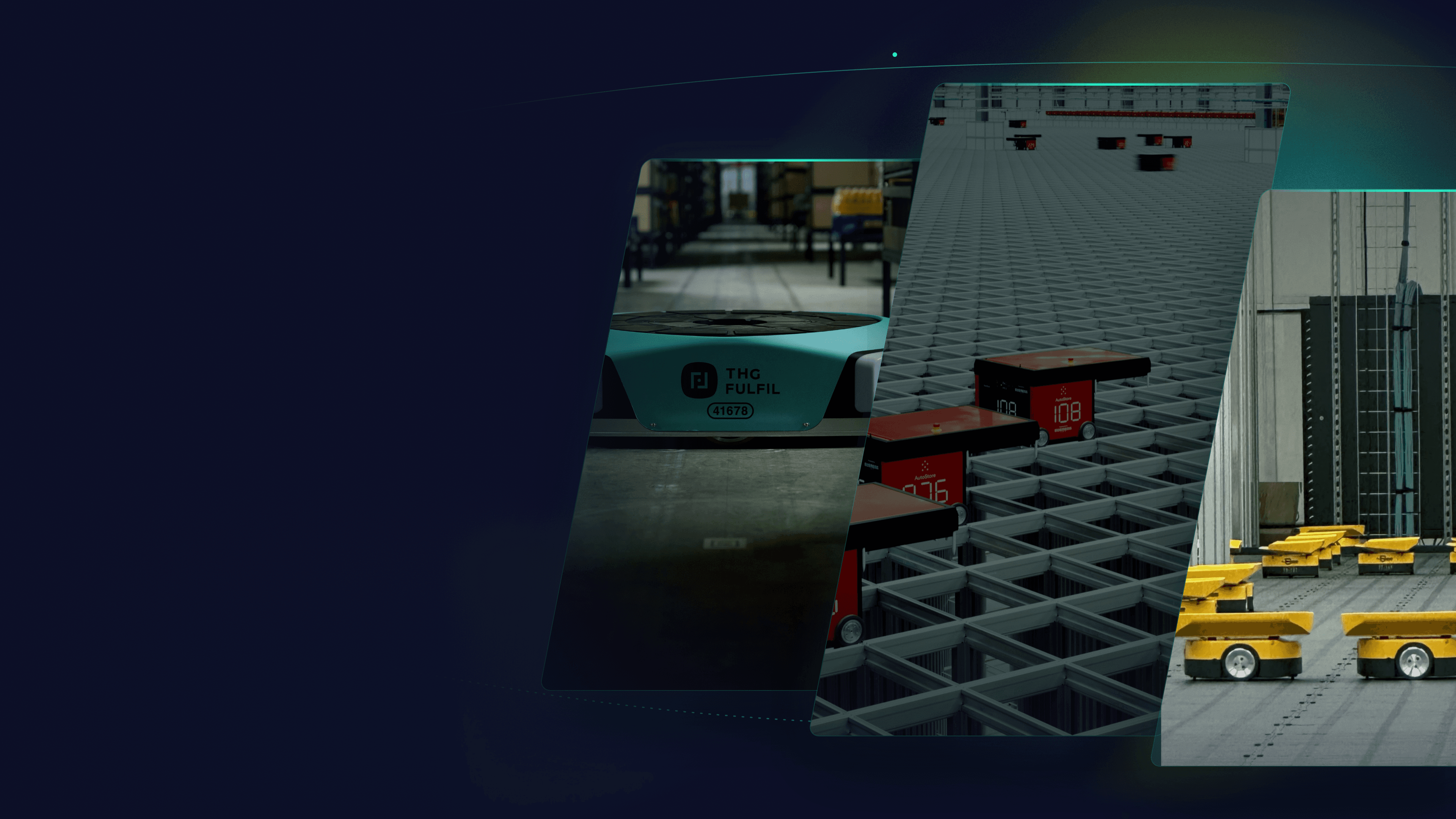
That's why THG Fulfil runs three across its own network: AutoStore, Libiao and Geek+. Between them, they cover every type of product and order we handle.
AutoStore
AutoStore stores stock in bins stacked tightly inside a grid. Robots run along the top of the grid, dig out the bin an order needs and deliver it to a picking station. With no aisles to walk, the same building holds far more stock, and pickers stay in one place while the products come to them.
Its performance is strongest for smaller SKUs. Across our own operation, AutoStore has delivered more than 200% productivity uplift and cut the space needed by up to 75%. For Footasylum, we designed and delivered a system in three months: 85 robots and more than 96,000 bin locations, enough to hold the brand's entire live range.
Libiao Robotics
Libiao builds flexible robotic sortation. Instead of a fixed conveyor sorter, fleets of small mobile robots sort items into the right order or destination at speed. The range covers T-Sorters for high-speed item sortation, 3D Sorters that sort vertically to handle large volumes in a compact footprint, and AirRob for high-density tote handling. Because every system is modular, you add robots as volumes grow, without major fixed infrastructure.
In our own operation, dual-level T-Sorters connect directly to AutoStore and also feed Libiao 3D Sorters: vertical sorters built for large sortation volumes, which give us 3,840 batch locations when peak hits. Together, they take AutoStore picks all the way through to sorted outbound orders in one flow.
When we needed more sortation capacity, Libiao went live in just 35 days. That's fast enough to add capacity in the run-up to peak, rather than planning a year ahead. Daily capacity jumped from 250,000 to 600,000 units, more than doubling what we could sort in a day. It runs at 99.9% sorting accuracy, so items land in the right order even at full speed, and 99.9% uptime, so it keeps going when it's needed most. With 430 robots deployed, we've unlocked extra capacity for batch picking at peak,
Geek+
Geek+ autonomous mobile robots take goods-to-person picking beyond the grid. They lift and carry stock of up to 1,200kg to picking stations, and move goods and pallets around the warehouse, so they can handle a wider range of products, including larger, heavier and fragile items. They run on a flat warehouse floor with no fixed structure, so they can go into an existing building and scale simply by adding more robots.
Robots are only as good as the software behind them
Our proprietary Warehouse Control System (WCS) coordinates robots, inventory and warehouse workflows in real time. Every bin request is a decision: which bin, which robot, which route, which picking station. The WCS makes those decisions thousands of times an hour, so operators spend less time waiting and more time picking.
We're constantly working to reduce the time an operator waits for the next bin to arrive. It sounds small, but it repeats on every pick, at every station, on every shift. Within our own AutoStore operation, WCS optimisation has delivered:
- 4.52 seconds average pick wait, down from 21 seconds
- 78% reduction in operator wait time
- 11,790 bin presentations per hour
Anyone can buy robotics, and the hardware already sets a high standard out of the box. Our software is what takes it to the next level and keeps improving it. It’s why we run the highest-output D2C AutoStore in the world.
How we change strategy for peak
Software also lets the warehouse change how it works when demand changes. Our own network shows how.
For most of the year, AutoStore pickers work order by order, and we don't need the full Libiao fleet day to day. As peak builds, we switch strategy through the WCS to high-volume batch picking: one bin trip now serves many orders at once. Those items flow straight on to the Libiao T-Sorters, which are always connected to AutoStore, and the full fleet is switched on to split them back out into individual orders.
The robots stay the same. How they work changes. Because each bin trip now serves far more orders, the same robots clear far more work:
- 120x more orders batch picked with Libiao at peak than on a normal day, so the same robots clear far more work when it matters most
- 99.9% sorting accuracy maintained through peak volumes, so customers still get the right items when volumes are at their highest
Delivery flexes too. Our Delivery Optimisation Engine checks every order against 60,000 delivery rules to choose the right courier, route and service, based on destination, cost, speed and how busy each courier is that day. So rather than every parcel going out with one default carrier, each order gets the option that's right for it.
Because more than 250 courier services sit in one system, orders can be redirected between carriers in seconds when one comes under pressure. That means parcels keep moving, instead of sitting on the dock waiting for a network to clear. Our scale with leading couriers including Royal Mail, DHL, DPD, FedEx, UPS, Evri and InPost help secure guaranteed capacity, priority unloading and priority service when it matters most.
Across the network, 94% of orders are processed through automation and 99.9% are dispatched on time and in full.
The same capability, inside your warehouse
THG Fulfil deploys this capability for brands in two ways.
We run it. Outsource your fulfilment to our automated network and peak is handled with the same technology described above.
We build it. We design, deploy and optimise automation inside your own warehouse, from business case and warehouse design through installation, go-live and continuous optimisation.
We assess every warehouse individually before recommending a solution. The technology is chosen around your operation, not the other way round.
Either way, you're on exactly the same technology we run ourselves. Every system we deploy, in our own warehouses and in our clients', runs through the same proprietary WCS, with the same operational standards. So every time we improve it, every brand gets the upgrade too.
And because we run the same robotics through every peak, we know what live, high-volume automation really demands, from system flows to peak trading pressure. That experience shapes how we plan for clients: we anticipate throughput and capacity requirements before they become operational risks, not after.
We don't just integrate automation. We operate it every day for clients, and we bring that experience to every client automation deployment.
Get ready before the next spike
The brands that handle peak well don't scramble for capacity in November. They build an operation that can flex all year.
Talk to our automation team about what the right mix of robotics and software could do for your warehouse.