


Resource Type: Blogs
Tag: Fulfilment
BLOG
As order volumes increase, in-house fulfilment can become inefficient and what starts as a logical decision quickly becomes a constraint. Discover how growing ecommerce brands can overcome this with scalable automation and a Robots-as-a-Service model.
March 27, 2026
Resource Type: Blogs
BLOG
Solving In-House Fulfilment Inefficiencies
As order volumes increase, in-house fulfilment can become inefficient and what starts as a logical decision quickly becomes a constraint. Discover how growing ecommerce brands can overcome this with scalable automation and a Robots-as-a-Service model.
March 27, 2026
4 min read
For many growing ecommerce brands, in-house fulfilment starts as a logical decision.
It offers control, operational proximity and the flexibility to build processes around the business.
But as order volumes increase, that same infrastructure can quickly become a constraint. A sustainable fulfilment strategy must address two problems simultaneously: operational inefficiency and capital constraints.
Why in-house fulfilment becomes inefficient at scale
In early growth stages, fulfilment operations are often built around speed and practicality rather than long-term scalability.
Processes evolve organically as order volumes grow; over time, these incremental changes create structural inefficiencies across the fulfilment operation. What works at 500 orders per day rarely holds up at 5,000.
Common symptoms include:
- Labour-intensive picking and packing workflows that cannot scale proportionally
- Sharply increasing operational costs during peak demand periods
- Higher error rates, mispacks and dispatch delays
- Limited visibility across fulfilment and stock accuracy
The underlying issue is rarely a single operational problem. It is the cumulative effect of systems and processes that were never designed for large-scale ecommerce fulfilment.
Identifying the root cause of fulfilment inefficiency
Before investing in automation or restructuring operations, it is critical to identify where fulfilment performance is breaking down. This requires looking beyond symptoms and analysing operational workflows in detail.
Common bottlenecks often occur in:
- Picking and packing operations
- Dispatch and carrier cut-off processes
- Inventory handling and stock accuracy
Mispicks, delayed dispatches, failed deliveries and returns often reveal where fulfilment processes are creating friction. Understanding these patterns allows brands to address the root cause of inefficiency rather than continually managing operational symptoms.
The hidden cost of manual fulfilment
Manual fulfilment processes can appear cost-effective in the early stages of growth. Labour provides flexibility, and additional capacity can be added relatively quickly. But as order volumes grow, the hidden costs of manual operations compound significantly.
Error correction, customer service demand and returns handling all increase operational overhead. At the same time, labour-driven processes limit how quickly fulfilment operations can scale during peak demand.
The true cost of manual fulfilment, therefore, extends beyond warehouse labour. It affects delivery reliability, customer experience and long-term operational efficiency.
Balancing automation with capital constraints
Automation offers a clear path to improving fulfilment performance. Robotics, automated picking systems and advanced warehouse infrastructure can increase throughput while reducing error rates.
The barrier has traditionally been financial. Conventional automation projects require substantial upfront capital investment and lengthy implementation timelines, often measured in years rather than months. For many businesses, this creates a difficult trade-off: invest heavily in infrastructure or continue operating inefficient fulfilment systems.
The challenge is not simply whether to automate, but how to access automation in a way that supports growth without tying up capital.
Pressure-testing fulfilment scalability
Ecommerce growth rarely follows a predictable pattern. Promotions, seasonal peaks and international expansion can all place sudden pressure on fulfilment operations. Infrastructure that performs adequately during normal trading periods may struggle when order volumes spike.
Assessing fulfilment scalability means understanding whether operations can absorb these fluctuations without service degradation.
Key questions include:
- Can fulfilment operations maintain service levels during peak demand?
- Are dispatch cut-off times competitive with market expectations?
- Can order volumes increase without major operational restructuring?
Scalable fulfilment infrastructure must support growth without requiring emergency investment every time demand rises.
How THG Fulfil solves the challenge
THG Fulfil provides automated fulfilment infrastructure designed to support growing ecommerce operations without requiring significant upfront capital investment.
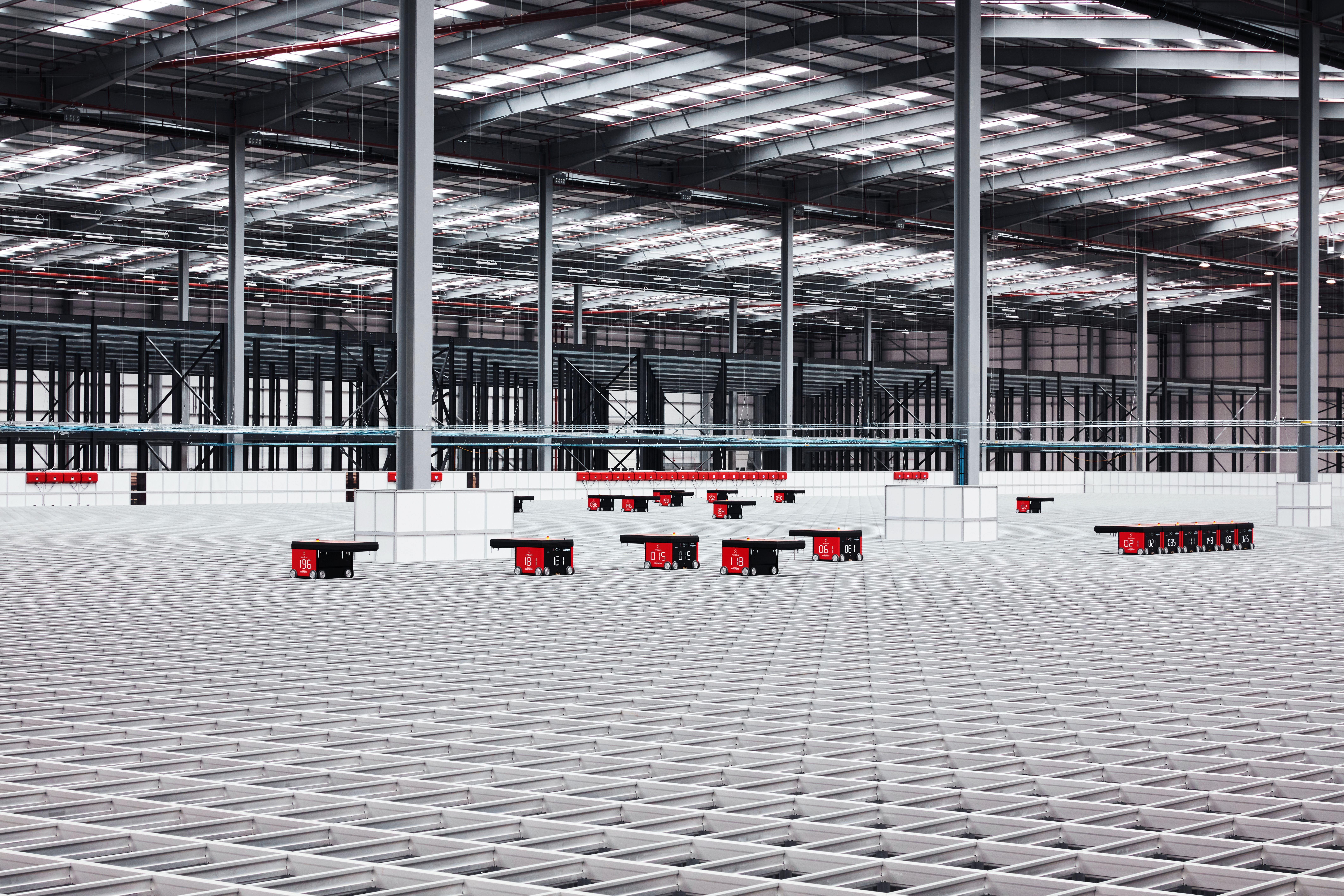
Our global automated fulfilment network spans multiple continents, combining advanced robotics, warehouse management systems and distributed fulfilment infrastructure to increase operational efficiency and reduce manual processes. Brands using THG Fulfil's infrastructure benefit from fulfilment operations built and optimised for ecommerce at scale.
For brands seeking automation without major capital expenditure, our Robots-as-a-Service (RaaS) model provides a practical solution. RaaS enables access to robotic fulfilment technology through an operational expenditure model. This removes the traditional barrier to automation, shifting it from a high-risk infrastructure project into a scalable, predictable operational cost.
The commercial impact of scalable fulfilment
When fulfilment infrastructure is designed to scale, the benefits extend beyond warehouse efficiency.
- Brands working with scalable, automated fulfilment partners typically achieve:
- Lower cost per order through reduced manual processes
- Faster picking, packing and dispatch speeds
- Higher delivery reliability and fewer errors
- Improved ability to absorb demand spikes
- Greater capital flexibility for growth initiatives
The objective is simple: remove fulfilment as a constraint on ecommerce growth.
Outgrowing your current fulfilment setup?
Learn how the right automation can streamline operations, improve delivery performance, and support your next stage of growth.