


Resource Type: Blogs
Tag: Fulfilment
BLOGS
Your fulfilment model is no longer just an operational decision. It is a commercial one.
In 2026, the gap between brands with scalable, automation-powered fulfilment and those managing it manually or on legacy infrastructure is widening and showing up directly in delivery performance, customer retention and margin.
May 8, 2026
Resource Type: Blogs
BLOGS
In-House vs Outsourced Fulfilment: A Comparison for 2026
Your fulfilment model is no longer just an operational decision. It is a commercial one.
In 2026, the gap between brands with scalable, automation-powered fulfilment and those managing it manually or on legacy infrastructure is widening and showing up directly in delivery performance, customer retention and margin.
May 8, 2026
Contents
Contents
- In-House vs Outsourced Fulfilment: A Comparison for 2026
- The Real Cost of In-House Fulfilment
- What a Modern 3PL Actually Delivers
- In-House vs Generic 3PLs vs THG Fulfil
- Building a Warehouse Automation Strategy: The Four-Step Framework
- Why Automation-Powered 3PL Changes the Equation
- Making the Decision
Contents
- In-House vs Outsourced Fulfilment: A Comparison for 2026
- The Real Cost of In-House Fulfilment
- What a Modern 3PL Actually Delivers
- In-House vs Generic 3PLs vs THG Fulfil
- Building a Warehouse Automation Strategy: The Four-Step Framework
- Why Automation-Powered 3PL Changes the Equation
- Making the Decision
Contents
Contents
- In-House vs Outsourced Fulfilment: A Comparison for 2026
- The Real Cost of In-House Fulfilment
- What a Modern 3PL Actually Delivers
- In-House vs Generic 3PLs vs THG Fulfil
- Building a Warehouse Automation Strategy: The Four-Step Framework
- Why Automation-Powered 3PL Changes the Equation
- Making the Decision
Contents
- In-House vs Outsourced Fulfilment: A Comparison for 2026
- The Real Cost of In-House Fulfilment
- What a Modern 3PL Actually Delivers
- In-House vs Generic 3PLs vs THG Fulfil
- Building a Warehouse Automation Strategy: The Four-Step Framework
- Why Automation-Powered 3PL Changes the Equation
- Making the Decision
The Real Cost of In-House Fulfilment
Running your own warehouse operation offers control, but control often comes at a price that is underestimated when the initial business case is built.
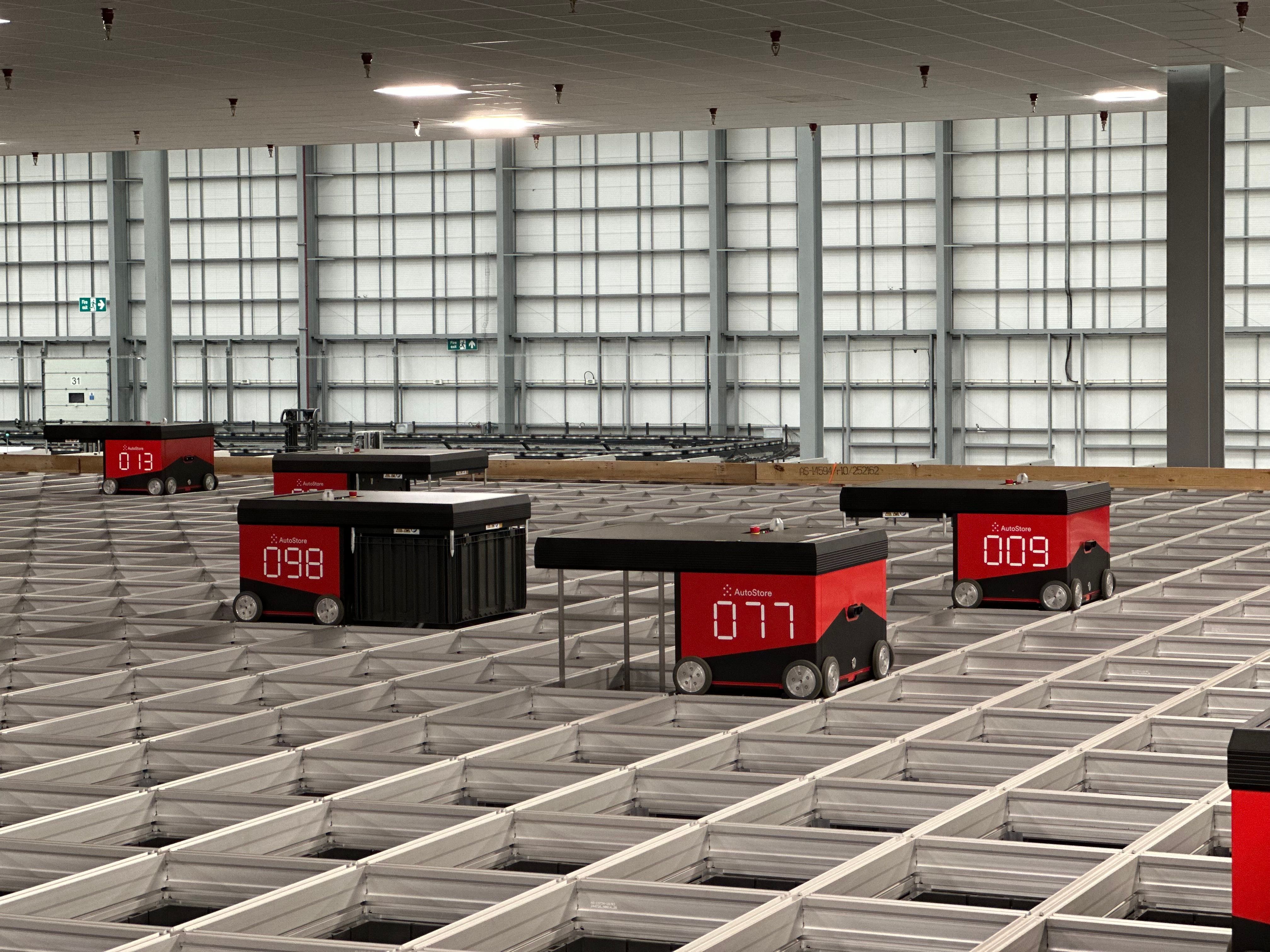
A credible automated in-house operation, the kind that delivers the throughput, accuracy and cost-per-order needed to compete in 2026, requires significant upfront investment. Goods-to-person robotics, automated sortation and a modern WMS typically require £1M to £10M+ in capital expenditure, before operational costs begin.
Beyond technology, there is the full burden of warehouse occupancy, workforce recruitment, carrier negotiation (without the volume leverage a 3PL brings), and the management bandwidth required to run a logistics business in parallel with your core commercial activity. While keeping fulfilment in-house seems attractive from a control perspective, it can often create the opposite effect in practice. Brands typically end up managing multiple external partners resulting in fragmented visibility and more complexity.
In-house fulfilment makes sense in a small number of scenarios: very high single-geography volumes where scale economics justify the investment, or highly bespoke product requirements that no third-party can meet. For most ecommerce brands, however, it represents a growing operational constraint as they scale.
What a Modern 3PL Actually Delivers
The 3PL model has changed fundamentally. Where once it meant basic pick-and-pack for commodity goods, leading providers now offer ecommerce fulfilment powered by automation that most brands could not replicate independently at any realistic cost.
The core advantages are well-established:
- A variable cost structure that scales with your order volume rather than being anchored to fixed infrastructure.
- Immediate access to established carrier networks and consolidated volume leverage.
- The operational expertise that takes years to build internally.
What has changed is the technology gap. The best 3PL providers have invested heavily in warehouse automation such as goods-to-person robotics, AI-driven WMS, automated packing, and the economics of accessing that infrastructure through a 3PL partnership are now significantly more compelling than building it yourself.
The critical question is not whether to outsource, but who to partner with.
In-House vs Generic 3PLs vs THG Fulfil
| In-house | Generic 3PL | THG Fulfil | |
| Pick accuracy | Typically 65-75% with manual ops | 98-99.5% (industry benchmark) | 99.9% order accuracy |
| Scalability | Fixed by infrastructure | Varies | Instant, global |
| Automation investment | £1M-£10M+ CapEx (2-6 yr payback) | Variable - only 33% automated | Zero CapEx - live robotics and AI included |
| Tech integration | Bespoke builds | Variable WMS capability | Native ecom integrations (live marketplaces, Shopify, Magento) |
| Category expertise | Build internally | Limited | 20 yrs + ecom-native operations |
| Global reach | Requires owned infrastructure | Network-dependent | UK, EU, US, APAC |
| Labour cost exposure | Labour = 60-65% of fulfilment costs | Partially offset via shared workforce | Autoated picking reducs dependency - AMRs deliver 250%+ ROI in live ops |
Building a Warehouse Automation Strategy: The Four-Step Framework
Whether you are evaluating in-house automation investment or assessing a 3PL's capability, the same framework applies.
Step 1: Establish your baseline. Know your current cost-per-order broken down by labour, technology, occupancy and carrier costs. Identify where errors and inefficiencies are concentrated. Map your volume peaks and troughs.
Step 2: Define specific objectives. Automation initiatives fail when goals are vague. Decide which metric matters most; cost-per-order, pick accuracy, throughput speed, or labour dependency, and set a measurable target.
Step 3: Match technology to your operational profile. Goods-to-person robotics suit high-SKU DTC operations. Automated sortation suits high-volume lower-SKU flows. AI-driven WMS optimises everything above. The right combination depends on your order profile, not on what is fashionable.
Step 4: Phase implementation. Start with data foundations; a modern WMS is the prerequisite for everything else. Automate highest-labour processes first. Extend automation as volumes justify. Apply AI-driven optimisation once the operational base is stable.
When assessing a 3PL partner's automation capability, ask specifically:
• What is your pick accuracy rate at peak volume?
• What automation is live in the facility that would handle my account?
• What is your SLA compliance rate during peak periods?
Mature providers answer these questions with precision.
Why Automation-Powered 3PL Changes the Equation
THG Fulfil operates as a standalone 3PL built on more than two decades of running some of the world's largest DTC ecommerce operations. The platform combines over four million square feet of strategically located global fulfilment capacity with proprietary technology and live automation deployment.
That means goods-to-person robotics achieving pick accuracy rates above 99.9%, AI-powered WMS optimising inventory positioning and carrier selection in real time, and native integrations to Shopify, Amazon and all major marketplace channels. All visible through a real-time client poral, giving brands full transparency the whole journey. It also means demonstrated operational experience across the categories where fulfilment complexity is highest: beauty and skincare, nutritional supplements, electronics, fragrance, luxury accessories, subscription commerce, pet wellness, functional drinks and more.
For brands with international growth ambitions, the network provides optionality; strategic fulfilment locations across the UK, Netherlands and US enabling duties-paid EU delivery and reduced last-mile costs through proximity to end consumers.
This provides access to infrastructure and expertise that most brands could not economically build themselves, without the capital commitment or operational risk.
Making the Decision
For most ecommerce businesses in 2026, particularly founder-led brands, high-growth operators and businesses with international ambitions, the case for an automation-powered 3PL partner is stronger than it has ever been. The technology and expertise gap between what leading 3PLs now offer and what most brands can realistically build in-house has widened significantly.
The strategic question is not whether to outsource, but whether you have the right partner.
Ready to transform your fulfilment operations?
Discover how THG Fulfil can help you scale your band, reduce cost-per-order and deliver exceptional customer experiences globally.