


Resource Type: Blogs
Tag: Fulfilment
BLOGS
Discover how THG Fulfil's Robots-as-a-Service (RaaS) model gives ecommerce brands access to world-class warehouse automation without heavy upfront investment. Real results. Proven technology.
April 30, 2026
Resource Type: Blogs
BLOGS
The 3PL Opportunity: Access World-Class Warehouse Automation Without the CapEx
Discover how THG Fulfil's Robots-as-a-Service (RaaS) model gives ecommerce brands access to world-class warehouse automation without heavy upfront investment. Real results. Proven technology.
April 30, 2026
Contents
Contents
- The 3PL Opportunity: Access World-Class Warehouse Automation Without the CapEx
- The Cost of Staying Manual
- The CapEx Problem
- What Changes When Your 3PL Is Already Automated
- How THG Fulfil’s Robots-as-a-Service Model Works
- The Proof is in the Numbers
- What to Look for in an Automated 3PL Partner
- Fulfilment as a Competitive Advantage
- Ready to explore what automated 3PL could mean for your operation?
Contents
- The 3PL Opportunity: Access World-Class Warehouse Automation Without the CapEx
- The Cost of Staying Manual
- The CapEx Problem
- What Changes When Your 3PL Is Already Automated
- How THG Fulfil’s Robots-as-a-Service Model Works
- The Proof is in the Numbers
- What to Look for in an Automated 3PL Partner
- Fulfilment as a Competitive Advantage
- Ready to explore what automated 3PL could mean for your operation?
Contents
Contents
- The 3PL Opportunity: Access World-Class Warehouse Automation Without the CapEx
- The Cost of Staying Manual
- The CapEx Problem
- What Changes When Your 3PL Is Already Automated
- How THG Fulfil’s Robots-as-a-Service Model Works
- The Proof is in the Numbers
- What to Look for in an Automated 3PL Partner
- Fulfilment as a Competitive Advantage
- Ready to explore what automated 3PL could mean for your operation?
Contents
- The 3PL Opportunity: Access World-Class Warehouse Automation Without the CapEx
- The Cost of Staying Manual
- The CapEx Problem
- What Changes When Your 3PL Is Already Automated
- How THG Fulfil’s Robots-as-a-Service Model Works
- The Proof is in the Numbers
- What to Look for in an Automated 3PL Partner
- Fulfilment as a Competitive Advantage
- Ready to explore what automated 3PL could mean for your operation?
There’s a widely held assumption in ecommerce operations: that world-class warehouse automation is reserved for the largest players. The ones with balance sheets capable of absorbing multi-million-pound capital investments, dedicated project teams and the runway to see through years of implementation risk. For everyone else, the thinking goes, it remains an aspiration rather than a reality.
That assumption is worth challenging. Because the cost barrier to automation has not disappeared, but the path around it has become considerably clearer.
The Cost of Staying Manual
Before addressing how automation becomes accessible, it is worth being clear about the cost of not automating. Manual fulfilment operations carry a set of structural disadvantages that compound over time, and ecommerce brands feel them most acutely.
Pre-automation, typical warehouse pick rates average 60 to 80 items per hour per associate, with performance varying based on experience, fatigue and order complexity. Error rates sit between 1% and 2%, which sounds modest until you account for the investigation, reprocessing, expedited replacements and customer service escalations that follow every single mistake. Traditional shelving systems frequently utilise less than 25% of available warehouse cube, while long pick paths stretch the time between receiving an order and dispatching it. During peak periods, the only lever available is headcount, which introduces its own cost volatility and operational risk.
The result is a fulfilment model that becomes less efficient as it grows. The more volume you introduce, the worse the economics become. That is not a sustainable foundation for scaling an ecommerce business.
The CapEx Problem
The solution is not a mystery. Automated warehousing, driven by technologies such as AutoStore cube storage systems, Geek+ autonomous mobile robots (AMRs) and Libiao Robotics intelligent robotic sortation, delivers step-change improvements in throughput, accuracy and cost efficiency. The evidence is compelling. Businesses that have made the transition report productivity uplifts of up to 200%, error rate reductions of 70%, and system uptime above 99.8%.
The problem has always been getting there. Purpose-built automation requires significant capital outlay, specialist engineering expertise, months of implementation, and the operational discipline to run complex systems at scale. For growing brands, particularly those in subscription, beauty, nutrition, electronics or wellness, investing tens of millions into owned warehouse infrastructure diverts capital from the areas of the business that drive revenue. It concentrates risk in a domain that sits outside of the core competency of most ecommerce operators.
This is the CapEx dilemma. The performance case for automation is clear. The financial and operational barriers to accessing it independently are equally clear.
Beyond the capital outlay, there is a deeper question that comes up in almost every conversation we have with operational leaders:"What if I invest in automation and it doesn't deliver?" It is a fair challenge, and one that a traditional CapEx model does nothing to answer. The risk sits entirely with the brand, from day one through to decommission. That is the problem RaaS is designed to solve.
What Changes When Your 3PL Is Already Automated
Third-party logistics has always offered the appeal of outsourced expertise. But not all 3PL providers are equal, and the gap between a conventional manual 3PL and one running advanced warehouse automation on your behalf is substantial.
An automated third-party logistics partner does not just store and ship your products. It absorbs the capital investment, the implementation risk, the ongoing optimisation complexity and the technology refresh cycle, and delivers the output of all that as part of a fulfilment service. The brand receives the performance benefits of automation without owning the infrastructure that produces them.
This is the proposition that THG Fulfil has built, tested and refined over the course of a real operational journey, not a theoretical one.
How THG Fulfil’s Robots-as-a-Service Model Works
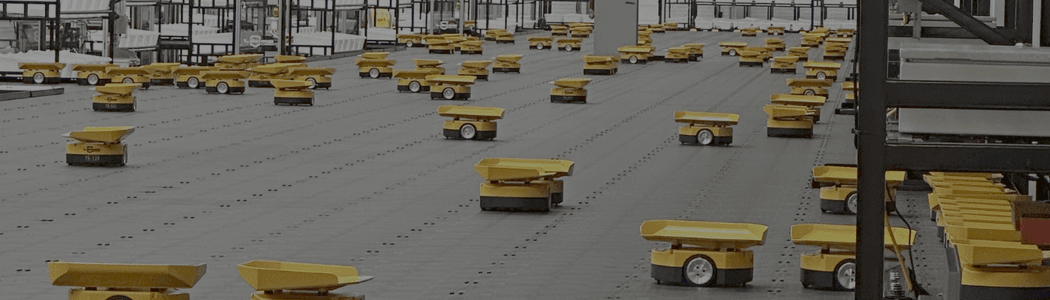
THG Fulfil operates some of the UK’s most advanced automated fulfilment centres, running AutoStore, Geekplus and Libiao Robotics across its network. These are not demonstration installations. They handle over 35 million orders annually, ship to 19 million customers across 195 countries, and are continuously optimised through THG Fulfil’s proprietary Warehouse Control System.
The key differentiator is that THG Fulfil operates these systems as an end-user, not merely as a distributor or integrator. More than £70 million has bene invested in automation across THG Fulfil’s own facilities, producing the kind of hard-won operational knowledge that cannot be replicated by a technology vendor working from a specification document.
That said, we understand how 'end-user operator' can sometimes be read. Some businesses are specifically looking for a credible engineering and solution design partner to lead the journey, not just to operate the outcome. That capability exists within THG Fulfil. Behind every deployment sits a full team of automation engineers, solution designers, software and WCS specialists and operational experts working end-to-end from initial solution design through to live optimisation. Our engineering credibility is not borrowed from vendors It has been earned through running these systems ourselves, at scale, under real trading conditions.
For brands choosing THG Fulfil as their third-party logistics partner, this means access to that infrastructure and expertise through a Robots-as-a-Service (RaaS) commercial model. Rather than a large upfront capital commitment, RaaS converts automation into a predictable operating cost that scales with your volumes. The key characteristics of this model are:
Reduced upfront CapEx. There is no requirement to purchase robotic hardware or fund infrastructure builds.
Predictable operating costs. Automation-driven unit economics replace the variable cost volatility of labour-intensive operations.
Scalable capacity during peak demand. Robot capacity can flex to meet seasonal surges without the lead time and risk of recruiting and training temporary workforces.
Phased deployment to reduce operational risk. Automation can be introduced incrementally alongside existing processes, protecting service continuity during transition.
Continuous optimisation built in. THG Fulfil’s proprietary WCS continuously refines robot routing, SKU placement and batch logic across live operations, meaning performance improves over time rather than plateauing at commissioning.
Performance accountability built into the commercial model. We commit to clear service levels and performance targets, measured monthly across the full contract term. That means the performance that you expect in month 1 is what you get in month 72. That's real accountability.
The Proof is in the Numbers
The RaaS model is not a commercial construct built on speculation. It reflects what THG Fulfil has already achieved, at scale, in its own operations.
The automation journey began in 2021 with the commissioning of an AutoStore system across a new 550,000 sq ft facility in Manchester. In the first year following deployment, operating costs on the AutoStore fell 33% against the baseline. Year two delivered a further 21% reduction. Year three added another 23% on top of that. The combined improvement of 77% was achieved during a period in which UK labour rates rose by 30%. The system paid back three times over.
The service metrics are equally significant. THG Fulfil now offers a 1am cut-off for UK next-day delivery orders, with an average transit time of 1.45 days from point of order to doorstep. This is not matched by any other operational service provider in the UK. Customer contact rates, a direct measure of fulfilment quality, have fallen 59% year-on-year.
These are not projections. They are the outcomes that clients fulfilling through THG Fulfil's automated network already benefit from.
What to Look for in an Automated 3PL Partner
For heads of operations, supply chain directors, COOs and founders evaluating third-party logistics options, the automation capability of a prospective partner deserves careful scrutiny. Not all automation claims are equal. There is a meaningful difference between a 3PL that has installed automation and one that genuinely understands how to operate, optimise and scale it.
The questions worth asking are: Does the provider run this technology in its own fulfilment operations? Can it demonstrate compound performance improvements over multiple years, not just post-go-live metrics? Does it have in-house project capability to deliver fast, reliable implementation? And does its commercial model allow you to access automation without concentrating capital risk in your balance sheet? And critically, does it back its performance claims with contractual SLAs that hold throughout the contract, not just at launch?
THG Fulfil is, to our knowledge, the only 3PL that is also an active, at-scale end-user of the same automation technologies it deploys for clients. The result is a warehouse automation strategy that has been earned through operational experience rather than assembled from vendor datasheets. AutoStore systems can be commissioned in under five months. Libiao T-Sorter installations are completed in as little as two to three weeks. Integration into existing WMS infrastructure is straightforward by design.
Fulfilment as a Competitive Advantage
The question for ambitious ecommerce brands is not whether automation will eventually become the standard expectation across fulfilment operations. It will. The question is whether you access its benefits now, while it still represents a competitive edge, or later, when doing so is simply the cost of staying relevant.
The Robots-as-a-Service model, delivered through a partner that has invested deeply in both the technology and the operational expertise to run it, makes that decision considerably less daunting. The capital barrier does not have to be yours to clear.
Automation shouldn't be a risk. With the right partner, it's an advantage.