


Resource Type: Blogs
Tag: Fulfilment
BLOGS
This guide sets out eight practical steps to building a warehouse automation strategy that delivers. Not a technology wishlist. A structured, sequenced framework drawn from real-world deployment experience across ecommerce fulfilment and third-party logistics operations.
May 6, 2026
Resource Type: Blogs
BLOGS
Your 8 Step Guide to a Successful Warehouse Automation Strategy
This guide sets out eight practical steps to building a warehouse automation strategy that delivers. Not a technology wishlist. A structured, sequenced framework drawn from real-world deployment experience across ecommerce fulfilment and third-party logistics operations.
May 6, 2026
Contents
Contents
- Your 8 Step Guide to a Successful Warehouse Automation Strategy
- What is a warehouse automation strategy?
- Step 1: Conduct an Honest Operational Audit
- Step 2: Define Your Business Case Before You Define Your Technology
- Step 3: Map Your SKU Profile and Order Complexity
- Step 4: Select Technology Against as Standard Set of Criteria
- Step 5: Plan Your Physical Build and Systems Integration With Precision
- Step 6: Establish Your Measurement Framework Before Go-Live
- Step 7: Optimise Relentlessly Post-Deployment
- Step 8: Plan for Scale and the Technologies That Are Coming
- Frequently Asked Questions
Contents
- Your 8 Step Guide to a Successful Warehouse Automation Strategy
- What is a warehouse automation strategy?
- Step 1: Conduct an Honest Operational Audit
- Step 2: Define Your Business Case Before You Define Your Technology
- Step 3: Map Your SKU Profile and Order Complexity
- Step 4: Select Technology Against as Standard Set of Criteria
- Step 5: Plan Your Physical Build and Systems Integration With Precision
- Step 6: Establish Your Measurement Framework Before Go-Live
- Step 7: Optimise Relentlessly Post-Deployment
- Step 8: Plan for Scale and the Technologies That Are Coming
- Frequently Asked Questions
Contents
Contents
- Your 8 Step Guide to a Successful Warehouse Automation Strategy
- What is a warehouse automation strategy?
- Step 1: Conduct an Honest Operational Audit
- Step 2: Define Your Business Case Before You Define Your Technology
- Step 3: Map Your SKU Profile and Order Complexity
- Step 4: Select Technology Against as Standard Set of Criteria
- Step 5: Plan Your Physical Build and Systems Integration With Precision
- Step 6: Establish Your Measurement Framework Before Go-Live
- Step 7: Optimise Relentlessly Post-Deployment
- Step 8: Plan for Scale and the Technologies That Are Coming
- Frequently Asked Questions
Contents
- Your 8 Step Guide to a Successful Warehouse Automation Strategy
- What is a warehouse automation strategy?
- Step 1: Conduct an Honest Operational Audit
- Step 2: Define Your Business Case Before You Define Your Technology
- Step 3: Map Your SKU Profile and Order Complexity
- Step 4: Select Technology Against as Standard Set of Criteria
- Step 5: Plan Your Physical Build and Systems Integration With Precision
- Step 6: Establish Your Measurement Framework Before Go-Live
- Step 7: Optimise Relentlessly Post-Deployment
- Step 8: Plan for Scale and the Technologies That Are Coming
- Frequently Asked Questions
What is a warehouse automation strategy?
A warehouse automation strategy is a structured plan for introducing technology-driven systems into fulfilment operations to improve speed, accuracy, capacity and cost efficiency. It covers technology selection, facility design, systems integration, performance measurement and continuous optimisation. It treats automation as a business transformation programme, not simply a capital investment in machinery. Executed in sequence, this framework consistently delivers productivity improvements and significant reductions in operating cost.
If you are leading fulfilment operations for a growing ecommerce brand, you already know the pressure. Rising labour costs, consumer expectations of next-day delivery as standard, and order volumes that can double across a peak trading window. The question is no longer whether to invest in warehouse automation. It is how to do it in a way that genuinely works for your operation.
The good news is that the path is clearer than it has ever been. The technology is more accessible, implementation timelines are shorter, and the results achievable by businesses of all sizes are genuinely compelling. Operations that have made the transition well are reporting productivity improvements of up to 200%, fulfilment error reductions of 70%, and operating cost savings that continue to compound year on year, even as labour costs rise.
This guide sets out eight practical steps to building a warehouse automation strategy that delivers. Not a technology wishlist. A structured, sequenced framework drawn from real-world deployment experience across ecommerce fulfilment and third-party logistics operations.
Step 1: Conduct an Honest Operational Audit
Every successful warehouse automation strategy starts in the same place: a clear, unsentimental picture of where you are today. Before you evaluate a single piece of technology, you need to measure the things that actually drive cost and customer outcomes.
What to Measure in Your Audit
The metrics that matter most are your pick rate per associate per hour, your order error rate and its true downstream cost, your space utilisation expressed as a proportion of available cube rather than floor area, and your scalability profile during peak periods. Each of these will form the baseline against which you measure every improvement you make post-implementation.
The Real Cost of Manual Operations
In many manual operations, the picture is more challenging than expected. Pick rates of 60 to 80 times per hour are typical, with significant variation based on associate experience. Error rates of 1% to 2% sound modest until you calculate the full cost: returns processing, customer service contacts, expedited replacements and client brand reputation risk. Space utilisation below 25% of available cube is common, because traditional shelving creates dead overhead space and increasingly long pick paths as SKU counts grow.
The audit is not about finding fault. It is about establishing the evidence base that makes the case for change and, later, allows you to quantify the return on your automation investment precisely.
Step 2: Define Your Business Case Before You Define Your Technology
The most common mistake in warehouse automation is allowing technology to drive strategy rather than the other way around. An impressive robotics demonstration in a controlled environment bears little resemblance to what that system will actually do for your specific operation, with your specific SKU profile and service commitments.
How to Frame Your Automation Objectives
Before speaking to any vendor, your business case needs to answer two questions. What problem are you actually solving – capacity constraint, labour cost, accuracy, speed to customer, or some combination? And what does success look like in measurable terms over what time frame?
Be specific. “Reduce operating cost” is not a business case. “Reduce variable labour cost per unit by 30% within 18 months of go-live" is. That level of precision is what allows you to evaluate technologies objectively, set realistic stakeholder expectations, and build an optimisation roadmap that continues to improve performance after deployment.
CapEx vs OpEx: Rethinking How You Fund Automation
One consideration that fundamentally changes the shape of your business case is how you choose to fund the investment. Traditionally, warehouse automation has been treated as a capital expenditure decision, requiring significant upfront investment and a multi-year payback horizon. That framing has historically put automation out of reach for businesses that needed the operational benefits but could not absorb the balance sheet impact.
THG Fulfil’s Robotics-as-a-Service (RaaS) model changes that calculation entirely. By converting automation from a CapEx commitment to a predictable OpEx structure, RaaS allows you to access the same world-class technology and performance outcomes whilst protecting cash flow and maintaining financial flexibility. Costs scale with your operational growth rather than front-loading the investment, and phased deployment means you can expand capacity incrementally as your business demands it. If capital availability has been a barrier to building your automation business case, it no longer needs to be.
The Pitfall of Technology-Led Strategies
Businesses that start by choosing a technology and then building a justification around it routinely find that deployment delivers less than expected. The reasons are predictable: the technology was not matched to the actual operational problem, success metrics were not defined in advance, and there is no structured post-implementation improvement plan. Define strategy first. Technology selection follows.
Step 3: Map Your SKU Profile and Order Complexity
Not all automation solutions perform equally across all SKY profiles. The system that delivers outstanding throughput for a high-velocity health supplement operation will behave very differently when tasked with processing electronics, fragile beauty items, or bulky household goods. Understanding your inventory in detail is a prerequisite for selecting the right ecommerce fulfilment technology.
Key Variables to Map
The variables that matter the most are SKU count and velocity distribution, physical dimensions and weight range across your range, the proportion of single-item versus multi-item orders, and how dramatically your volume profile shifts across the year. Together, these factors determine which automation technology delivers the best throughput, the most reliable uptime and the lowest cost per unit for your specific operation.
How your SKU Profile Determines Technology Fit
This mapping exercise gives you an objective basis for comparing vendor claims, because theoretical throughput figures mean very little without understanding the specific order profiles those figures assume. It also reveals whether a single automation technology can serve your entire operation or whether a complementary multi-technology approach is the better fit. Cube storage systems perform exceptionally well for small to medium SKUs. Autonomous mobile robots complement them for less standard-sized items. Automated sortation accelerates outbound throughput regardless of SKU profile. Your inventory map tells you which combination applies.
Step 4: Select Technology Against as Standard Set of Criteria
With your objectives defined and your SKU profile mapped, you are ready to evaluate automation technologies against a structured framework rather than responding to sales pitches. The criteria that matter most in practice are consistent regardless of which technology you are assessing.
The Core Evaluation Criteria
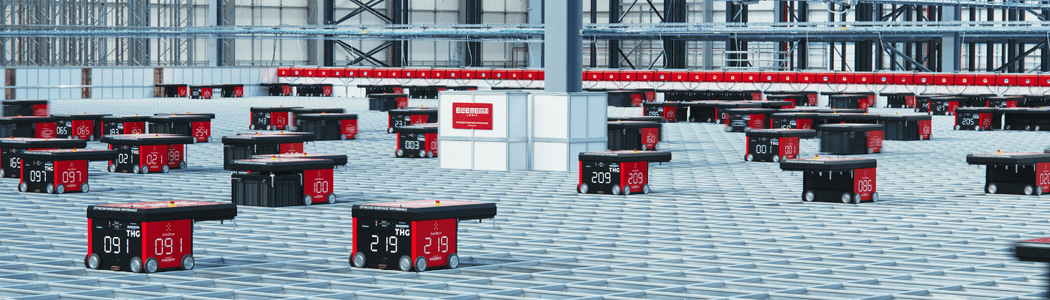
Space efficiency is often the starting point in ecommerce fulfilment, where warehousing cost is a material component of your total operating base. AutoStore’s cube storage system delivers storage capacity up to four times greater than traditional manual warehousing by exploiting the full building height, with global uptime of 99.7% and mean time between failures exceeding 3,000 hours.
Reliability and uptime should be evaluated with equal rigour. A system with strong throughput figures but unpredictable availability creates more operational risk than it resolves. Look for proven global track records with reference deployments under comparable order profiles.
Commissioning speed and integration readiness are particularly important for operations working against a peak trading deadline. The best warehouse automation systems require a single clean connection to your WMS and are modular enough to be built in phases, allowing you to begin shipping before the final build is complete.
Scalability should be assessed honestly. The most valuable automation investments are those that grow with your business through incremental expansion rather than requiring complete re-engineering as your requirements evolve.
Single Technology vs Multi-Technology Approach
Many operations benefit from a multi-technology architecture that addresses different parts of the fulfilment process with the most appropriate solution. Cube storage for dense retrieval, autonomous mobile robots for broader SKU. Coverage, and AMR-based sortation to accelerate outbound throughput is a proven combination. The key is ensuring each technology is evaluated not in isolation but as part of a coherent operational system.
Step 5: Plan Your Physical Build and Systems Integration With Precision
The distance between committing to a warehouse operation project and having it live and shipping orders is where many well-intentioned strategies encounter their most painful surprises. Physical construction timelines, WMS configuration and inventory migration sequencing all required detailed planning that needs to begin months before any hardware arrives on site.
Commissioning Timeline Planning
Operations that commission fastest share on discipline: they invest in the integration blueprint long before they invest in the technology. A precisely specified WMS integration reduces physical and systems build complexity significantly. AutoStore installations, for example, can move from building access to first order shipped in as little as three months when operational requirements have been clearly defined in advance.
Phasing the build allows you to begin operations before the final configuration is complete, reducing both the commercial risk and the pressure on teams to learn a new system under peak trading conditions.
Phased Implementation vs Full Cutover
A phased approach is almost always preferable to a full cutover. Starting partial, shipping real orders, and learning the system under live conditions before expanding gives you cleaner performance data and builds operational confidence before you are fully committed. Allow contingency in your commissioning timeline. The first weeks of live operation will surface process interactions that testing did not anticipate, and that is normal. What matters is having the capacity to respond quickly.
Step 6: Establish Your Measurement Framework Before Go-Live
You cannot demonstrate ROI without a credible baseline, and you cannot build a continuous improvement programme without clear metrics. Establishing your measurement framework before go0live is one of the highest-leverage interactions you can take in the entire automation journey.
The Metrics That Matter
The metrics that matter most span cost, quality and customer experience: variable labour cost per unit (your most direct measure of operational efficiency), pick rate and put-away rate per hour, order accuracy, system uptime, and customer contact rate. That last metric, the proportion of orders that generate an inbound query or complaint, is one of the most telling indicators of fulfilment performance. Faster, more accurate processing drives it down. Operations that have transitioned from manual to automated fulfilment have seen customer contact rates fall by as much as 59%.
Why Baseline Data is Non-Negotiable
Measure all of these before you go live. And resist the temptation to optimise prematurely during the first weeks of operation. The initial period is for learning the system under real conditions. The data gathered in those first weeks will inform far better decisions than any assumption you can make before the system has run at volume.
Step 7: Optimise Relentlessly Post-Deployment
Commissioning a warehouse automation system is not the end of the process. It is the beginning of a continuous improvement cycle that, executed with discipline, compounds its returns year on year.
The Highest-Impact Optimisation Levers
The most impactful optimisation opportunities are often less obvious than the technology itself. Put-away strategy in dense storage systems, for example, has a direct bearing on throughput. Distributing fast-moving SKUs evenly across a storage grid, based on velocity and pick frequency, reduces robot contention and can boost throughput by 30% without any hardware investment. Bin configuration, matching bin sizes to SKU dimensions and turnover using volumetric data, can add 75% more storage locations to an existing grid without physical expansion.
Batching logic is equally powerful. Intelligent batch picking during peak periods delivers up to a 120% throughput increase over pick-to-pack operations, with a 60% uplift in outbound capacity during the highest-volume weeks. Combined optimisation across all these levers has delivered total operating cost reductions of 77% over three years, during a period in which labour rates rose by 30%.
Building an Optimisation Culture
The operations that extract the most value form automation treat optimisation as a permanent discipline, not a one-time project. Invest in the data infrastructure to monitor performance continuously, build a dedicated improvement function, and plan your annual optimisation roadmap with the same rigour you apply to capital investment decisions. The technology delivers the platform. The people and processes deliver the compound return.
Step 8: Plan for Scale and the Technologies That Are Coming
The final step in a successful warehouse automation strategy is to plan beyond your immediate requirements. The ecommerce fulfilment technology landscape is moving at pace, and the architecture decisions you make today will either enable or constrain your options in three to five years.
Emerging Technologies to Plan For Now
Artificial Intelligence is already being applied to predictive maintenance, demand forecasting and dynamic inventory management in leading operations. Computer vision is improving quality control and inventory verification. IoT sensors enable environmental monitoring and predictive analytics that make operations more reliable and more sustainable. Blockchain integration is beginning to address supply chain transparency and traceability requirements for regulated categories. The fully autonomous fulfilment centre is a practical near-term ambition for operations that are planning for it now.
When evaluating any automation technology or third-party logistics partner today, ask explicitly how they are positioned for this future. The right partner will not just help you solve today’s operational challenge. They will help you build the capability to meet the demands of tomorrow’s commerce landscape.
Sustainability as a Strategic Driver
Sustainability is becoming s central component of warehouse automation strategy. Electric-powered robotic fleets consume significantly less energy than traditional warehouse equipment. Optimised packaging and reduced error rates cut waste and returns. Local fulfilment capabilities reduce transportation impact. These outcomes matter to customers, and to an increasingly sustainability-conscious talent market. They also increasingly matter to investors.
Key Results: What Strategic Warehouse Automation Delivers
Operations that follow this eight-step framework consistently achieve the following outcomes:
Metric | Result |
Productivity improvement | Up to 200% |
Fulfilment error reduction | Up to 70% |
Operating cost reduction (over 3 years) | Up to 77% |
Customer contact rate reduction | Up to 59% |
Storage capacity increase vs manual | Up to 4x |
System uptime | 99.8% |
Next-day delivery cut-off time achievable | 1am |
Average order transit time | 1.5 days |
These results are not theoretical. They reflect real-world performance from automated ecommerce fulfilment operations processing tens of millions of orders annually across global networks.
The Bottom Line
The businesses winning in ecommerce fulfilment are those that can deliver speed, accuracy and scalability without a proportional increase in cost. Warehouse automation, implemented strategically, is how you build that competitive edge.
The eight steps above will not make the journey frictionless, but they will ensure that every decision you make is grounded in operational reality, that your technology choices serve your strategy rather than define it, and that you build a platform for continuous improvement that compounds value over time.
The opportunity is real. The results, for operations that approach automation with discipline and intent, are genuinely transformative.
Want the full detail? THG Fulfil's complete guide to warehouse automation covers the full journey from operational challenge to technology deployment, integration and continuous optimisation, including the specific decisions, tools and frameworks that delivered 200% productivity gains, 70% fewer fulfilment errors and consistent year-on-year cost reduction.
Frequently Asked Questions
How long does warehouse automation take to implement?
Implementation timelines vary based on technology complexity, facility readiness and integration requirements. A modular cube storage system such as AutoStore can be physically built and integrated with an existing WMS in as little as three months from building access, with the first orders shipped within five months. Autonomous mobile robot deployments can be operational even faster, given their lower physical build complexity. A realistic planning assumption for most operations is three to nine months from contract to first live order, with a phrased approach recommended to reduce risk.
What is the ROI of warehouse automation?
ROI from warehouse automation varies by operation, but well-executed deployments consistently deliver payback within two to three years. The primary drivers of return are reductions in variable labour costs per unit, increased throughput without proportional headcount growth, reduced error rates and their downstream costs, and the ability to absorb volume growth without major additional investment. Operating cost reductions of 30% - 77% over three years have been documented in real-world deployments, with the system paying back three times over in periods during which labour costs were rising significantly.
What is the best warehouse automation technology for ecommerce fulfilment?
There is no single best technology. The right choice depends on your SKU profile, order complexity, facility constraints and growth trajectory. Cube storage systems (such as AutoStore) perform exceptionally well for operations with large SKU counts and small to medium product dimensions, delivering up to 4x storage density versus manual warehousing. Autonomous mobile robots (AMRs) offer flexibility for broader SKU ranges and are well suited to retrofitting into existing facilities. AMR-based sortation accelerates outbound throughput for high-volume operations. Many leading operations combine two or more technologies to address different parts of their fulfilment process.
How do I choose between AutoStore, Geek+ and Libiao Robotics?
The decision should be driven by your operational priorities and SKU profile. AutoStore is the strongest choice where storage density and reliability are the primary requirements for small to medium SKUs. Geek+ AMRs are the most flexible option and typically deliver the fastest commissioning timelines. Libiao Sortation systems address throughput bottlenecks in outbound processing and are most valuable when batch sizes and order volumes are high. A detailed SKU mapping exercise and operational audit will clarify which technology or combination is right for your specific operation.
What are the biggest risks in a warehouse automation project?
The most common causes of underperformance are technology selection driven by trends rather than operational requirements, insufficient WMS integration planning, the absence of a pre-implementation baseline for measuring ROI, and treating go-live as the end of the project rather than the beginning of an optimisation programme. Operations that follow a structured strategy process, as outlined in this guide, consistently avoid these pitfalls. Early-stage uptime challenges are normal and manageable when commissioning is phased, and quick-response maintenance protocols are in place from day one.
How much does warehouse automation cost?
Costs vary significantly based on technology type, scale and facility configuration. Autonomous mobile robot deployments can be cost-effective at relatively modest scale. Cube storage systems such as AutoStore represent a larger initial investment but deliver exceptional density and reliability returns, particularly for operations with high SKU counts and significant volume. The most meaningful cost evaluation is total cost of ownership over five to seven years, incorporating labour savings, reduced error costs, space efficiency gains and scalability benefits. A detailed feasibility assessment with ROI modelling is the right starting point for any specific business case.
It is also worth noting that high capital upfront investment is no longer a pre-requisite for accessing world-class automation. THG Fulfil’s Robotics-as-a-Service (RaaS) model transitions warehouse automation from a traditional CapEx commitment to a predictable OpEx structure, giving operations access to enterprise-grade robotics without the capital outlay that has historically made automation feel out of reach. The model is built around four principles: optimised capital allocation that protects cash flow, a clear and consistent fee structure that maintains full financial visibility, on-demand scalability to handle peak demand and high-volume trading periods, and phased deployment that manages risk and ensures a smooth operational transition. For businesses at any stage of their automation journey, RaaS offers commercially agile path to the same technology and performance outcomes as a full capital investment.
When is the right time to start a warehouse automation strategy?
The right time is before the pressure becomes urgent. Operations that invest in automation under crisis conditions, such as sudden capacity shortage or a peak trading emergency, face compressed timelines that limit their ability to evaluate options properly. The most successful automation journeys begin 12 to 18 months before the capability is genuinely needed, allowing time for a thorough operational audit, business case development, technology selection and phased implementation. If you are already feelign the strain of manual operations, the time to start planning is now.
Can a third-party logistics provider help me implement warehouse automation?
Yes, and the right 3PL partner can significantly de-risk your automation journey. A 3PL with direct deployment and optimisation experience across multiple automation technologies offers practical guidance that technology vendors cannot. THG Fulfil, for example, operates as an AutoStore and Libiao distributor partner, offering feasibility assessments, implementation support, training and ongoing optimisation services grounded in the experience of running one of the UK’s most advanced automated fulfilment networks. The key is choosing a partner who treats automation as a long-term operational commitment, not a one-time installation.
Ready to automate your fulfilment?
Learn how you can streamline operations, improve delivery performance, and support your next stage of growth.