


Resource Type: Blogs
Tag: Fulfilment
BLOGS
AutoStore is the world's most deployed warehouse automation system. But for most scaling ecommerce brands, owning one is the wrong decision and the brands winning on fulfilment already know it.
June 12, 2026
Resource Type: Blogs
BLOGS
AutoStore Without the Infrastructure: A New Model for Ecommerce Fulfilment
AutoStore is the world's most deployed warehouse automation system. But for most scaling ecommerce brands, owning one is the wrong decision and the brands winning on fulfilment already know it.
June 12, 2026
Contents
Contents
- AutoStore Without the Infrastructure: A New Model for Ecommerce Fulfilment
- Is AutoStore worth the investment?
- What is AutoStore and what does it actually do well?
- What going it alone actually costs
- Access without the infrastructure: The RaaS model explained
- What this looks like in practice
- Choosing your route
Contents
- AutoStore Without the Infrastructure: A New Model for Ecommerce Fulfilment
- Is AutoStore worth the investment?
- What is AutoStore and what does it actually do well?
- What going it alone actually costs
- Access without the infrastructure: The RaaS model explained
- What this looks like in practice
- Choosing your route
Contents
Contents
- AutoStore Without the Infrastructure: A New Model for Ecommerce Fulfilment
- Is AutoStore worth the investment?
- What is AutoStore and what does it actually do well?
- What going it alone actually costs
- Access without the infrastructure: The RaaS model explained
- What this looks like in practice
- Choosing your route
Contents
- AutoStore Without the Infrastructure: A New Model for Ecommerce Fulfilment
- Is AutoStore worth the investment?
- What is AutoStore and what does it actually do well?
- What going it alone actually costs
- Access without the infrastructure: The RaaS model explained
- What this looks like in practice
- Choosing your route
Is AutoStore worth the investment?
AutoStore is not future technology. It is the standard against which serious ecommerce fulfilment operations are now measured. A cube-based, goods to person picking system that stores up to four times more inventory in the same footprint as conventional shelving, runs with 99.8% uptime, and has been deployed across more than 1,850 sites in 60 countries. For ecommerce operations in beauty, nutrition, wellness, electronics, and subscription commerce, the performance case is not seriously in question.
The conventional assumption is that AutoStore requires you to own the grid, fund the build, manage the installation and absorb the risk. For a small number of high-volume operations, this may be true. But for the vast majority of scaling ecommerce brands, owning an AutoStore system is the wrong decision. Not because the technology underdelivers, but because outright ownership is the wrong commercial model for how most businesses grow. For many scaling ecommerce brands, committing millions of pounds to owned automation infrastructure before volume and network requirements have stabilised introduces significant strategic risk.
The technology is worth it, but the question is how you access it.
What is AutoStore and what does it actually do well?
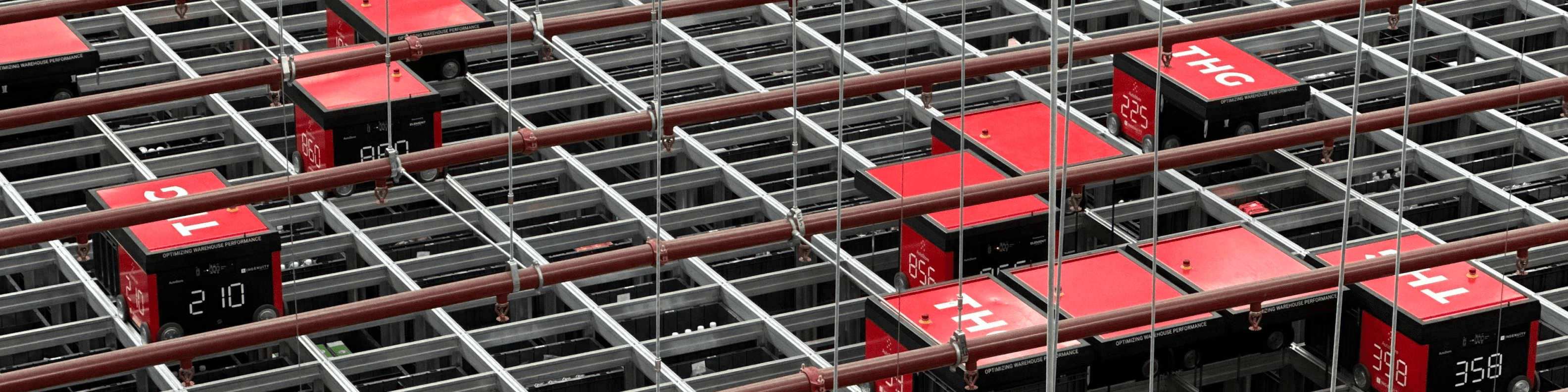
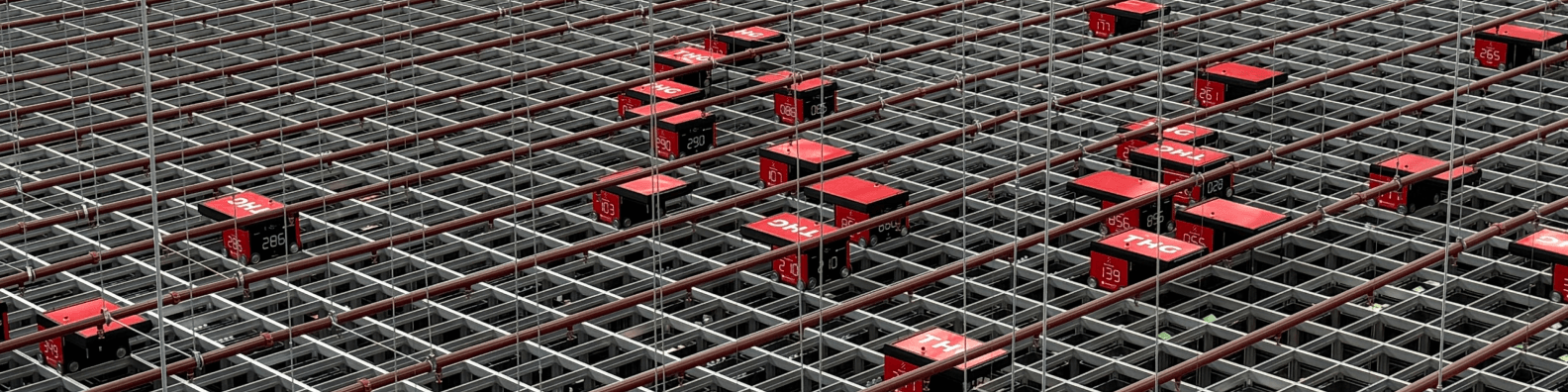
AutoStore works on a deceptively simple principle; bins are stacked in dense vertical columns withing a grid, robots navigate the top of the grid, locate the relevant bin, retrieve it, and deliver it to a picking port where an operator fulfils the order. The system uses up to 75% less space than conventional shelving, operates continuously with near-zero downtime, and scales through software rather than headcount. No walking the warehouse floor, no searching shelves, no wasted motion.
The system performs exceptionally on a specific SKU profile: small to medium dimensions, consistent packaging, high velocity. Think skincare, supplements, electronics accessories, fragrances, VMS products, coffee pods, phone cases. These are categories where AutoStore's high-density storage and rapid goods-to-person picking cycle deliver measurable throughput advantages over any manual or semi-automated alternative.
But AutoStore is not always the answer. Brands with predominantly bulky goods, irregular dimensions or heavy items will find that the bin dimensions and weight constraints make AutoStore unsuitable as a primary solution. A credible automation strategy starts with an honest assessment of product profile. AutoStore is transformative for the right brand, but it isn’t the universal answer.
For the SKU profiles it serves, the performance numbers are very compelling. Average manual pick rates of 60-80 units per operator hour are replaced by a throughput measured in thousands of goods-to-person bin presentations per hour. Error rates fall from those of manual picking operations to ones boasting 99.9% accuracy. Even more critically, the system doesn't degrade under peak volume.
What going it alone actually costs
For brands with the right product profile, the logic of ownership is understandable. Control over the infrastructure, no dependency on a third party, a long-term fixed asset. But the numbers tell a different story.
The capital outlay.
A mid-market AutoStore installation typically costs between £2.5m to £5m, with larger, multi-site or omnichannel configurations running to approximately £40 million or more. On top of the hardware and facility modifications which add even more to the initial outlay. And this doesn’t include software licensing or Warehouse Management System (WMS) integrations which adds a further cost.
The implementation timeline.
In our experience, full deployment from contract signing to go-live typically takes 6 to 18 months. More complex configurations can take that to 2 to 3 years. During that period, your operation is running manual, carrying all the associated inefficiencies, whilst capital is tied up in an asset that is not yet generating return.
The payback period.
Industry benchmarks typically place payback for a well-designed AutoStore system at 2 to 3 years. A Forrester Total Economic Impact study commissioned by AutoStore found a composite payback of 18 months in an optimised scenario, but with a net cost of approximately £4.9 million over 3 years before the benefits can be felt. This is a significant gap for a growing ecommerce brand.
The ongoing cost of ownership.
Hardware is not a one-time cost. AutoStore systems typically require specialist support, software maintenance and certified servicing arrangements that need to be factored into total cost of ownership. Battery replacement cycles, robot refurbishment, software upgrafes and annual servicing contracts all compound the total cost of ownership well beyond the inital capital figure.
The demand risk that most business cases ignore.
Perhaps the most underestimated exposure is volume dependency. A brand that signs a 10-year facility lease, builds an AutoStore grid sized for projected growth, and then experiences a strategic pivot, a category contraction, or a market shift is carrying infrastructure it cannot easily exit. In this case, the grid can’t be repurposed, the lease runs regardless of volume and the capital sinks. Businesses operating in fast-moving categories such as beauty and wellness, need operational flexibility that isn’t guaranteed in fixed infrastructure.
The challenge isn't that AutoStore fails to generate ROI. It's that ROI only matters if the assumptions underpinning the business case remain true for years after the investment is made. This isn’t an argument against AutoStore, it’s an argument against ownership as the default model for accessing it.
Access without the infrastructure: The RaaS model explained
Most fulfilment providers acquired automation capability after building their warehouse networks. We did it the other way around. THG Fulfil built and optimised AutoStore across our own operations, processing tens of millions of orders under real trading conditions, before structuring commercial access that removes the capital and operational barriers for other brands.
THG Fulfil is the only AutoStore distributor in the world offering a Robots-as-a-Service (RaaS) commercial model. Understanding what that means in practice is important because it’s a fundamentally different commercial structure to traditional automation ownership. Under a RaaS model, brands access AutoStore powered fulfilment through a service agreement rather than a capital purchase. There is no upfront grid investment, nno facility modification cost, and no software licensing burden. Instead, the cost of automation is converted into a predictable operational expenditure that scales proportionally with order volume.
This is the distinction that matters most for scaling ecommerce brands: RaaS mean syour automation investment scales with your revenue, not against it.
This means accessing not just the physical AutoStore infrastructure but the full technology stack behind it; our proprietary Warehouse Control System (WCS) and Warehouse Management System (WMS) that have been continuously refined across our own operations since 2021. Bin wait times reduced from 8.71 seconds to 4.52 seconds. Operating costs on our AutoStore fell 77% over three years, during a period when UK labour rates rose nearly 30%. Partners inherit that optimisation from day one, not after years of learning curve.
Our Omega facility in Warrington is currently undergoing a major expansion: AutoStore capacity is doubling from 120,000 to 240,000 bins, with outbound ports increasing from 20 to 65; a step-change in throughput capacity scheduled for completion in October 2026. The brands fulfilling through our network benefit from that investment without contributing to it.
A concern that comes up in almost every conversation with operations leaders is this: if I do not own the automation, do I lose control of my operation? It is a fair challenge, and one that deserves a direct answer. What brands lose is the infrastructure ownership. What they retain, and often gain, is operational transparency and performance accountability. Our partners have real-time visibility into their inventory, order status, and fulfilment performance through integrated WMS access. Performance is governed by contractual SLAs.
Rather than committing millions of pounds upfront and waiting years for utilisation to catch up, brands can align automation costs directly with order volume. As demand grows, automation costs grow alongside revenue. If demand slows, the business is not left carrying underutilised infrastructure on its balance sheet. The value of this model is not theoretical. When brands access automation through a service model rather than owning the infrastructure themselves, the operational outcomes can be significant.
What this looks like in practice
The proof of a warehouse automation strategy is not in the specification; it is in what happens to a brand's operation when it is deployed.
Cult Beauty migrated five million units to our automated ICON facility in four weeks. Fulfilment cost per unit fell by over 40%, generating more than $11 million in annual savings. Delivery times improved by 65%. Next-day cut-off windows extended by 5.5 hours; directly expanding the number of customers who could qualify for next-day delivery without any increase in cost to serve.
Biossance consolidated four US warehouses into one, migrating EU and UK operations into our facilities in Poland and Manchester. Fulfilment costs fell to 7% of revenue, saving over £5.6 million annually. Customer contact rates fell from 25% to below 10%. Trustpilot scores moved from 2.1 to 4.3. CSAT improved from 72% to 82.9%. The savings were reinvested into growth.
Holland & Barrett migrated 8,500 SKUs to our network, achieving average delivery times of 1.5 days from click to doorstep, and integrating next-day click-and-collect across all 727 UK stores; turning fulfilment infrastructure into a driver of retail foot traffic and customer loyalty.
These are not outcomes delivered by a standard logistics provider; they are the result of a technology-led fulfilment operation that treats automation as its core capability, not a feature.

Choosing your route
The right warehouse automation strategy depends on volume, growth trajectory, capital allocation priorities, and operational complexity.
Build and own may make sense for brands operating at very high order volumes with long-term warehouse commitments and a strategic case for direct infrastructure ownership.
Commission through a distributor if you operate your own facility, want THG Fulfil's engineering expertise and proprietary technology stack to lead the installation, and are ready to operate the system yourself.
Partner with THG Fulfil if you want access to AutoStore-powered automation, proprietary WCS and WMS technology, and a Robots-as-a-Service commercial mode. This is the right route for most scaling ecommerce brands: the ones that want automation to be an accelerant, not a distraction.
The performance case for AutoStore is increasingly well understood. The strategic decision now is not whether the technology works, but whether ownership is the most efficient way to access it. The question is which route gets you there fastest, at the lowest risk, and with the strongest foundation for what comes next.
Ready to Access AutoStore-Powered Fulfilment?
THG Fulfil's network is expanding. Whether you want to explore a fulfilment partnership, commission your own AutoStore installation, or understand which route is right for your operation, speak to the team.