


Resource Type: Blogs
Tag: Fulfilment
BLOGS
In 2026, the warehouse automation conversation has moved on. The question isn't whether to automate. It's whether your technology, software and operational strategy are intelligent enough to compound their own efficiency over time.
June 5, 2026
Resource Type: Blogs
BLOGS
AutoStore, Libiao, Geek+: Inside THG Fulfil's Robotics Ecosystem
In 2026, the warehouse automation conversation has moved on. The question isn't whether to automate. It's whether your technology, software and operational strategy are intelligent enough to compound their own efficiency over time.
June 5, 2026
Contents
Contents
- AutoStore, Libiao, Geek+: Inside THG Fulfil's Robotics Ecosystem
- AutoStore: maximising capacity through intelligent storage automation
- Libiao: reimagining order sorting for modern ecommerce
- Geek+: autonomous robotics for smarter warehouse operations
- How the three technologies work together
- Why AI is becoming the brain behind warehouse automation
- Building a fulfilment strategy for long-term growth
Contents
- AutoStore, Libiao, Geek+: Inside THG Fulfil's Robotics Ecosystem
- AutoStore: maximising capacity through intelligent storage automation
- Libiao: reimagining order sorting for modern ecommerce
- Geek+: autonomous robotics for smarter warehouse operations
- How the three technologies work together
- Why AI is becoming the brain behind warehouse automation
- Building a fulfilment strategy for long-term growth
Contents
Contents
- AutoStore, Libiao, Geek+: Inside THG Fulfil's Robotics Ecosystem
- AutoStore: maximising capacity through intelligent storage automation
- Libiao: reimagining order sorting for modern ecommerce
- Geek+: autonomous robotics for smarter warehouse operations
- How the three technologies work together
- Why AI is becoming the brain behind warehouse automation
- Building a fulfilment strategy for long-term growth
Contents
- AutoStore, Libiao, Geek+: Inside THG Fulfil's Robotics Ecosystem
- AutoStore: maximising capacity through intelligent storage automation
- Libiao: reimagining order sorting for modern ecommerce
- Geek+: autonomous robotics for smarter warehouse operations
- How the three technologies work together
- Why AI is becoming the brain behind warehouse automation
- Building a fulfilment strategy for long-term growth
In a busy ecommerce warehouse during peak season, a single sorting bottleneck can delay thousands of orders. Add strained storage capacity and a shrinking labour pool, and the pressure on fulfilment operations becomes acute. For many brands however, the question is no longer whether to automate, but how to do it in a way that actually holds up at scale.
For some operations, this means starting from scratch. For others, it might mean evaluating their current warehouse automation strategy and adapting it to meet new demands without disrupting what’s already working. There is no wrong answer, but there is a wrong approach, and that’s deploying automation for the sake of it, without considering how it connects to the wider operation.
The competitive landscape has shifted significantly. Warehouse automation is no longer the differentiator it once was. Automated warehouse robotics are more accessible than ever before, and many ecommerce operations already have some form of automation in place. It is not enough to just automate your fulfilment operations; in 2026 the advantage comes from the software. That means software capable of predicting and managing peak demand before it hits. It means AI that can navigate supply chain complexity and make real-time changes.
At THG Fulfil, we work with brands to build robotics ecosystems rather than bolt on individual fixes. As an authorised AutoStore and Libiao distributor, we combine hardware deployment with technology-led, AI-driven optimisation and operational expertise. We know from experience that robots are only part of the answer. It's the software and strategy that determines whether and automation investment delivers a lasting advantage
AutoStore: maximising capacity through intelligent storage automation
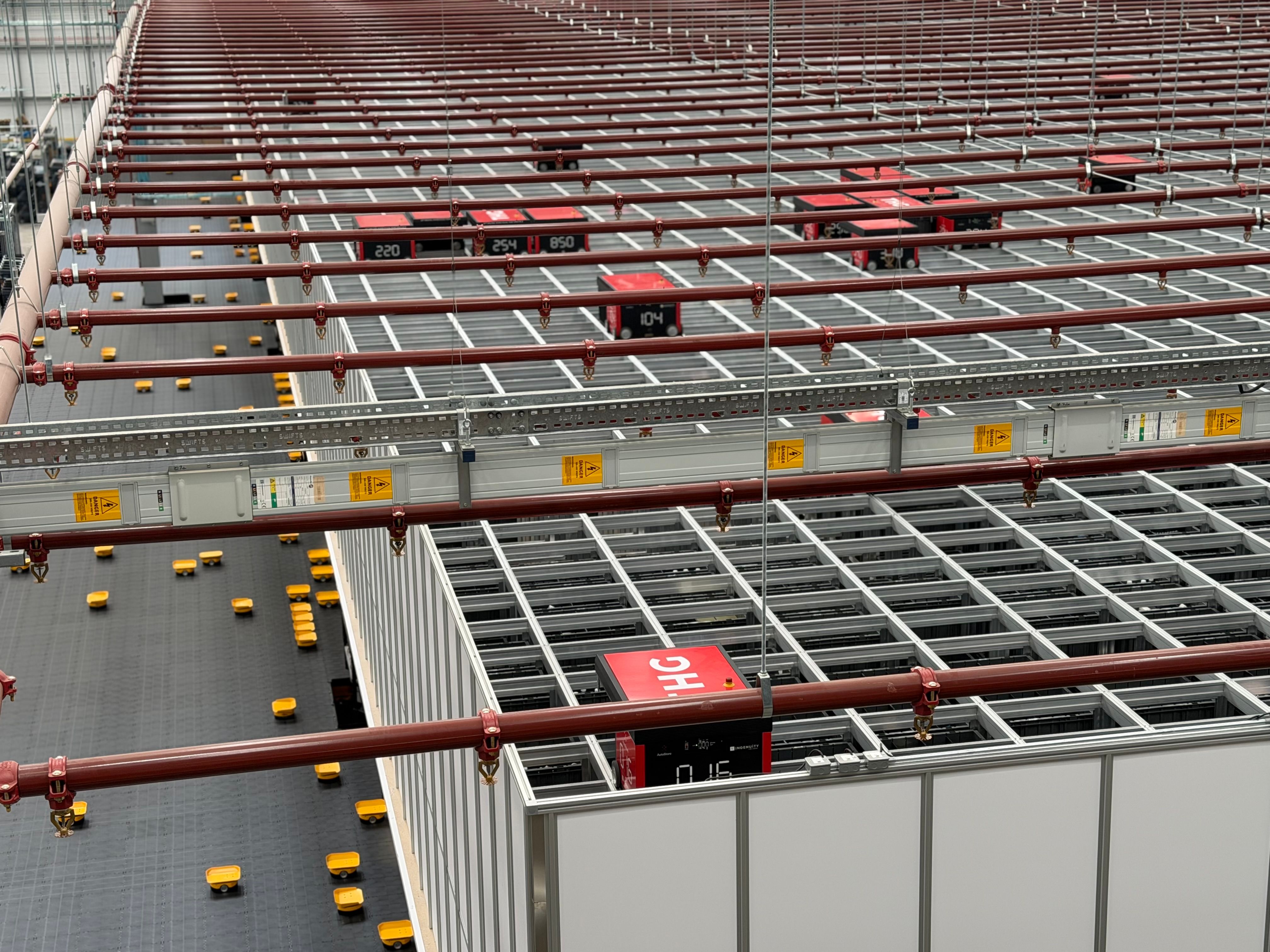
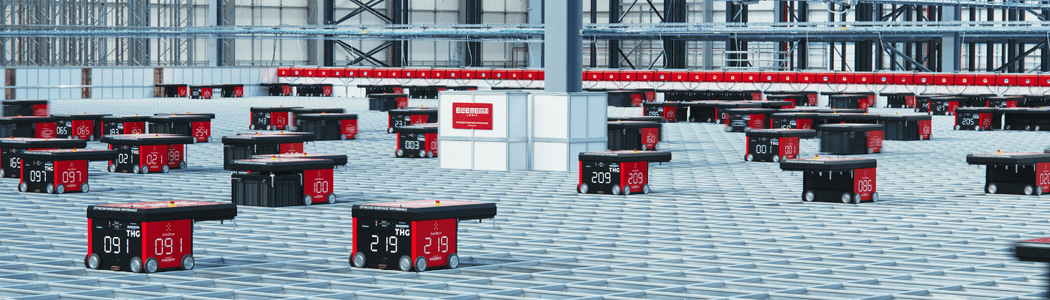
Space is undoubtedly one of the first limitations that hits growing ecommerce businesses. As product ranges expand, warehouse space becomes one of the most constrained and costly resources in any fulfilment operation. AutoStore addresses this through a cube-based automated storage and retrieval system in which robots navigate a compact grid, retrieving inventory bins and delivering them directly to workstations. But describing it simply as a compact storage grid misses the point, and misses what becomes possible when it is paired with the right software.
The hardware credentials are strong. AutoStore uses up to 75% less space than traditional shelving, runs continuously without shift constraints, scales by adding robots or grid modules without disrupting live operations, and does all of this with an energy-efficient design that keeps running costs in check. For any ecommerce operation under pressure on space, labour and sustainability, those are meaningful advantages.
But the real story of what AutoStore can do is in the numbers. Powered by our proprietary Warehouse Control System (WCS) and Warehouse Management System (WMS), we have been continuously optimising our AutoStore installation since 2021. The site now operates as the world's highest direct-to-consumer output facility; processing 11,790 outbound bin presentations per hour, with bin wait times cut from 8.71 seconds to 4.52 seconds and user wait times reduced from 21 seconds to 13 seconds. Those gains didn't come from the hardware. They came from intelligent batching algorithms, live space utilisation strategies and relentless software-driven optimisation applied over years.
The hardware is the ceiling; but it’s the software that determines how close you can get to it.
Libiao: reimagining order sorting for modern ecommerce
Sorting is one of those operational challenges that gets underestimated until it becomes the thing holding everything else back. Traditional conveyor-based sorting systems are effective in stable, high-volume environments, but ecommerce fulfilment is rarely any of these things. Order profiles shift, carrier requirements change, peak periods spike sharply and fixed systems can’t adapt without significant cost and disruption.
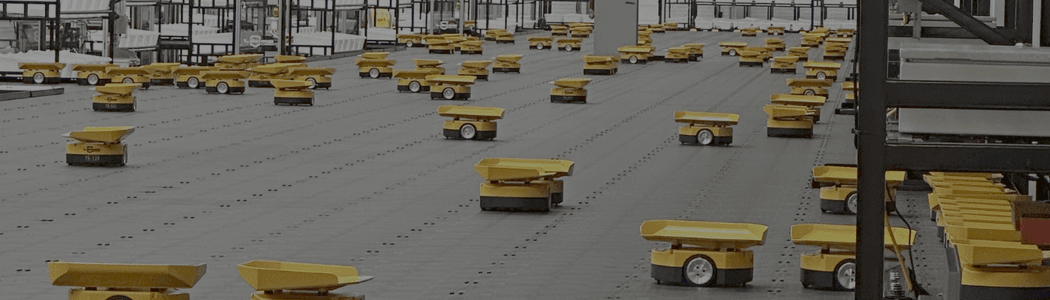
Libiao takes a fundamentally different approach, with over 200 exclusive invention patents and more than 60,000 robots in operation globally. Rather than building capacity into fixed infrastructure, Libiao's autonomous robots operate across a modular grid, routing orders to the correct dispatch destination. Capacity is determined by the number of robots, not the size of the conveyor so the operation scales with actual demand, not theoretical peak projections.
THG Fulfil’s deployment illustrates this clearly. Previously capped at 250,000 sortation units per day, we deployed 80 Libiao T-Sorters across 14 induction stations, enabling dynamic sortation across 3,840 destinations. The results were immediate: capacity increased to 600,000 units per day, throughput reached 11,151 items per hour, 34% above target, with 99.9% sort accuracy and 99.9% uptime. Peak labour dependency fell by 45 FTE. The system was live in 35 days.
As an official Libiao distributor, we’ve lived this deployment ourselves before offering it to clients. That means the expertise we bring isn’t theoretical, it’s built on running the system at scale, optimising it under real peak conditions and understanding exactly where the software and strategy makes a difference. Structured as Robotics-as-a-Service, the model removes heavy upfront capital expenditure and integrates fully with our existing WMS, feeding into the same intelligence layer that connects the wider ecosystem.
Geek+: autonomous robotics for smarter warehouse operations
There is a layer of warehouse operations that often gets overlooked in automation conversations. Inventory doesn't only need to be stored and sorted; it needs to move efficiently throughout the warehouse from the moment it arrives. In a manually operated warehouse, this consumes a significant amount of labour time and it’s rarely where you want your team’s attention to be.
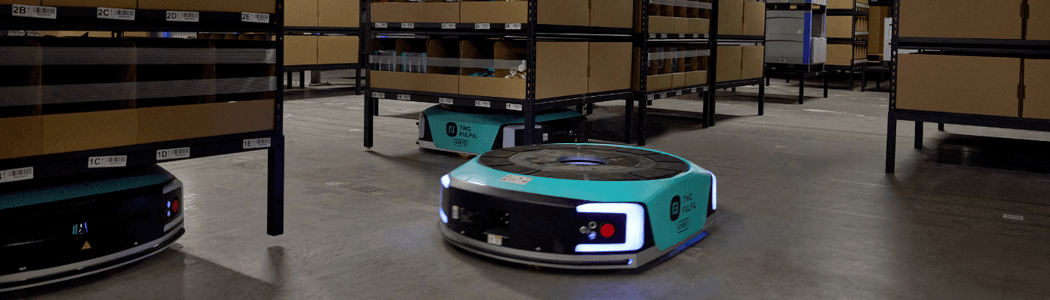
Geek+ is a global leader in Autonomous Mobile Robotics. The system is designed to handle any size or complexity of inventory, making it particularly well suited to ecommerce operations with wide and evolving SKU ranges.
What distinguishes Geek+ from simpler goods-to-person systems is the intelligence running beneath the hardware. Dynamic slotting algorithms continuously reposition high-velocity SKUs closer to workstations based on live order data, including during off-peak and idle hours, meaning the system actively improves its own efficiency over time rather than remaining static after implementation. The technology adapts to the operation rather than the other way around.
The impact of deploying Geek+ within our own network is obvious. The system joined an already extensive automation ecosystem and through integrated software, the combined result is that 95% of all units sold now move through some form of automation. This underpins one of our most commercially demanding commitments: a 1am next-day delivery cut-off. This is only possible when the technology behind it is reliable enough to perform consistently at peak, not just in normal conditions. Done well, this is what integrated automation actually means: not a collection of robots doing repetitive tasks, but a material flow layer with enough intelligence built into it to adapt, optimise and scale alongside the business it serves.
How the three technologies work together
Each of these systems delivers value independently. The performance data in each section makes that clear. But the most significant operational gains emerge when they're designed as a connected ecosystem with a common data layer and shared optimisation logic running across all solutions. The physical automation handles the movement; the intelligence determines the efficiency. The system actively gets better at running itself.
This isn’t a theoretical model. At THG Fulfil we operate AutoStore, Libiao and Geek+ within our fulfilment network. The configuration varies by site depending on throughput requirements, building constraints and the operational profile of that site. This is deliberate. Not every warehouse has or needs every technology, but what they all have in common is the intelligence layer that connects them all. The data generated across the ecosystem is only as valuable as the software capable of acting on it.
Why AI is becoming the brain behind warehouse automation
AI handles the decisions that determine how efficiently the robotics move around the warehouse, and increasingly, it’s that capability that defines the gap between the operations that perform well and those who reach their ceiling.
In practice, this means using operational data to make smarter choices about where inventory is positioned within the AutoStore grid, how labour is allocated across shifts, where bottlenecks are forming before they cause delays, and how capacity should be planned ahead of peak periods. Rather than optimising once at implementation and leaving it there, AI-driven systems can improve continuously as more data accumulates.
This is the distinction between automating a process and building an operation that gets progressively better at running itself. The advantage no longer comes from having robots. It comes from the software and strategy built around them; the intelligence layer that turns a collection of automated systems into an operation that learns, adapts and compounds its own efficiency over time.
That is what technology-led fulfilment actually means. And it is what we are building at THG Fulfil.
Building a fulfilment strategy for long-term growth
The brands that benefit most from warehouse automation aren't necessarily those with the largest budgets. They're the ones that make better decisions about how their technologies connect, and invest in the software and strategy to make those connections intelligent.
AutoStore, Libiao and Geek+ each address a different layer of the fulfilment challenge. But the argument for automation isn’t about any of them in isolation. It’s about what becomes possible when you operate a connected ecosystem of automation, underpinned by AI-driven optimisation and operational experts to keep the system improving and evolving. That is where the advantage lies; not in the hardware specification, but in the intelligence layer built around it.
We have proven this in our own network, which is a result of years of software-driven optimisation applied to our own fulfilment operations at real peak volumes, for real brands. It is the outcome of years of trying, failing and trying again. We offer that expertise, and the technology and intelligence we have built, to the brands we work with.
The question for any ecommerce business evaluating automation isn’t simply which robots to buy. It's the full strategy and ecosystem you want to build; whether that means shifting from manual operations to automation for the first time, or expanding an existing robotics ecosystem to the next level. It's about choosing a partner who can demonstrate, with their own numbers, that they’ve solved the harder problem of making the robots work together intelligently.
We have.
Turn your fulfilment into a competitive edge
If you're evaluating warehouse automation options, we'd be happy to talk through what a connected robotics ecosystem might look like for your operation.