


Resource Type: Blogs
Tag: Fulfilment
BLOGS
Warehouse automation is more commercially accessible than ever before, but more difficult to get right. The brands that succeed are achieving over 200% productivity uplifts, reducing fulfilment space requirements by more than 75%, and building operations capable of scaling from 250,000 to 600,000 units per day without a corresponding increase in headcount.
The brands getting it wrong are carrying expensive, underutilised infrastructure that compounds operational problems rather than eliminating them.
May 20, 2026
Resource Type: Blogs
BLOGS
Warehouse Automation: What It Costs, What It Delivers, When It Makes Sense
Warehouse automation is more commercially accessible than ever before, but more difficult to get right. The brands that succeed are achieving over 200% productivity uplifts, reducing fulfilment space requirements by more than 75%, and building operations capable of scaling from 250,000 to 600,000 units per day without a corresponding increase in headcount.
The brands getting it wrong are carrying expensive, underutilised infrastructure that compounds operational problems rather than eliminating them.
May 20, 2026
Contents
Contents
Contents
Contents
Contents
Contents
In 2026, warehouse automation is more commercially accessible than ever before, yet it has never been more frequently misapplied.
The difference is almost never the technology. It is strategy, implementation expertise and whether the partner deploying your automation has operated it themselves at scale.
At THG Fulfil, we have invested over £70 million into warehouse automation across our fulfilment network.
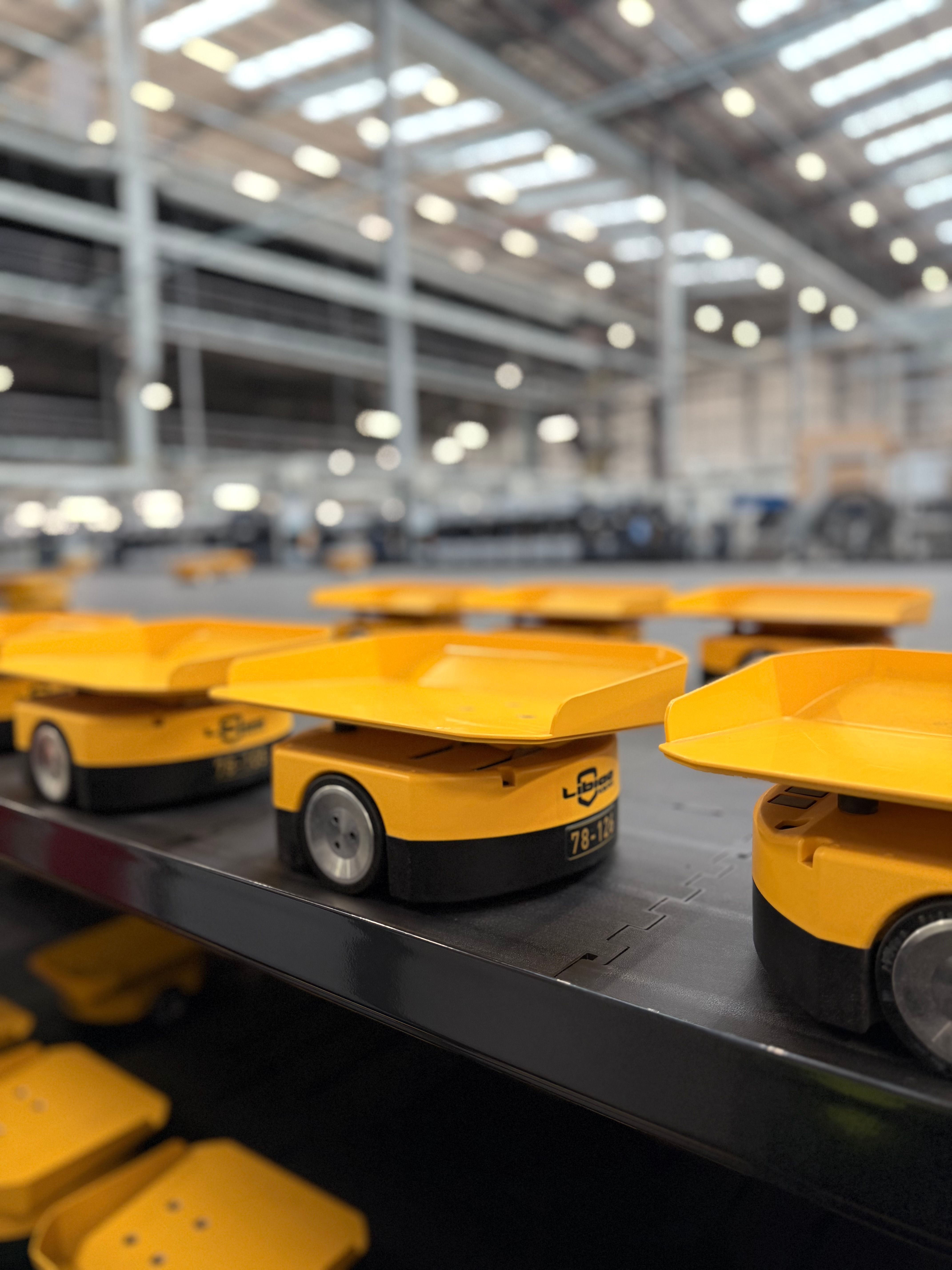
That includes optimising AutoStore since 2021, deploying 430 Libiao T-Sorting robots across our Manchester facility in 2025, and operating Geek+ autonomous mobile robots at scale. As an official distributor for both AutoStore and Libiao, we apply the operational expertise gained from implementing warehouse robotics at scale to help other brands build more effective automation strategies.
What Modern Warehouse Automation Includes
Automation in ecommerce fulfilment is not a single technology. It is layered architecture, spanning goods-to-person robotics, automated conveyor and sortation systems, AI-driven WMS and intelligent data infrastructure that connects everything.
At THG Fulfil, our approach is built around a proprietary technology stack, including our warehouse management system, carrier management and real-time data layer, because we have always believed that hardware without software intelligence is just expensive equipment.
The most meaningful developments right now are not simply robotic arms replacing pickers. They are the decision layer. Systems that dynamically allocate labour, predict demand at SKU level, optimise pick paths in real time and surface anomalies before they become customer complaints.
In global ecommerce fulfilment operations, it’s the intelligence layer that enables consistency across markets, languages, carriers and regulations. This means:
- 3x throughput increase typical with goods-to-person robotics
- <0.1% fulfilment error rates achievable with automated verification
- 40% labour cost reduction reported in leading automated facilities
- £2m+ infrastructure investment typically required for meaningful automation
The performance results that we have achieved with AutoStore and Libiao, including becoming the world's highest D2C output from an AutoStore system, are not a product of the robots alone. They are a product of the proprietary Warehouse Control System built and continuously optimised by our own engineering team.
When we deploy automation for clients, whether that is an AutoStore grid or a Libiao T-Sorter installation, the same WCS intelligence comes with it. That is not something any hardware distributor without active operational experience can replicate.
The Real Cost of Warehouse Automation
Too many vendor conversations begin with capabilities and bury the cost reality. So here it is plainly: a meaningful warehouse automation strategy requires significant capital commitment, and the payback horizon is typically 2-5 years depending on volume, SKU complexity and the degree of integration with existing systems.
A goods-to-person robotics system starts at several million pounds at scale. Automated sortation and conveyor infrastructure for a mid-size operation adds hundreds of thousands more. Software licensing, integration work and ongoing maintenance add further to the total cost of ownership. For brands processing fewer than 5,000 orders per day, the economics often do not yet support full warehouse automation, and any honest third-party logistics partner should tell you that.
At THG Fulfil, we operate across multiple automated fulfilment sites and have built proprietary technology that interfaces directly with our robotic infrastructure. That investment allows us to offer clients the benefits of automation; speed, accuracy, scalability, without requiring them to carry the capital cost or the operational risk. That model only works because the technology and the logistics are genuinely integrated, not bolted together.
When Does Warehouse Automation Genuinely Make Commercial Sense?
As an operator, distributor and optimiser of all three platforms; AutoStore, Libiao Robotics and Geek+ AMRs, we have a clear view of where automation generates compelling ROI and where it does not. Across our own facilities, automation has delivered a 77% combined improvement in labour costs over three years, with the system paying back more than three times over. Here is the framework we use to assess readiness for any client.
- Establish your volume case before selecting any platform. AutoStore suits high-SKU-count, uniform-format operations with strong daily throughput requirements. Libiao T-Sorters are built for high-volume outbound sortation environments; they drove a step-change in capacity when we scaled to 600,000 units per day. Geek+ suits dynamic, mixed-category operations with evolving layouts. Volume alone does not determine the right system; the shape of your operation does.
- Map your peak-to-average ratio honestly. Our Manchester facility needed to absorb significant volume surges without proportional labour increases; that is precisely the problem Libiao's T-Sorter architecture solved, cutting peak labour dependency while improving carrier cut-off adherence. If your peak-to-average ratio exceeds 3:1, manual operations often become increasingly difficult to scale reliably during peak periods.
- Audit your data readiness before deploying any hardware. Our WCS drives continuous optimisation, intelligent batching, real-time SKU placement, dynamic robot routing. But it requires clean, structured inventory data to operate effectively. Inventory accuracy below 98% will compromise performance regardless of the robotics platform chosen.
- Consider the customer experience stakes in your category. For beauty, wellness, premium fragrance, luxury accessories and subscription brands, the fulfilment experience is the brand experience. Automated scanning and verification across pick, pack and dispatch reduces error rates to levels manual operations struggle to achieve consistently.
- Model the build-vs-partner decision over five years, not one. At THG Fulfil, we have absorbed over £70 million in automation investment, optimised across years of live operation. Accessing that infrastructure as a client or having THG Fulfil deploy and operate it for you, means bypassing the costly trial-and-error phase entirely. For brands under £150M revenue, the five-year economics of partnership almost always outperform the economics of building and operating warehouse robotics independently.
- Ensure the software is integrated, not interfaced. The performance gap between an automation system that is integrated with a proprietary WCS and one that is connected to a third-party WMS via middleware is significant, in throughput, in resilience and in the speed with which problems are identified and resolved. When our engineering team build the system, they are also the team that optimises it and fixes it.
Automation as a Competitive Edge, Not Just an Operational Tool
The challenge is no longer access to automation technology. The challenge is deploying it in a way that delivers measurable operational and commercial advantage.
For some brands, that means investing directly in warehouse robotics and software infrastructure. For others, it means partnering with operators who have already optimised those systems at scale. Our success story with warehouse robotics is the result of two decades of operational investment, a commitment to building technology in-house and a genuine belief that automation is only as powerful as the expertise surrounding it.
Whether you’re evaluating your own facility or looking for a fulfilment partner, whose infrastructure is already optimised and operational, the conversation starts with understanding your operation specifically. Your volumes. Your SKU profile. Your peak demands. Your customer promises. That is the only honest starting point for any automation strategy worth having.
Ready to assess the right automation platform for your operation?
Explore how THG Fulfil helps brands evaluate, deploy and optimise automation infrastructure built around real operational complexity, not generic technology recommendations.